Every summer seems to bring new headlines about record wildfires, from Canada to Australia. Yet one figure surprises most people: worldwide, the total area burned by fire has actually gone down. Both things are true at the same time, and the explanation says a lot about how climate, land use and forest management interact.
Fewer fires, less land burned
A paper published in the journal Science found that the number of natural and human-caused fires fell by 24.3% between 1998 and 2015. The researchers linked the drop to a long shift away from nomadic lifestyles and towards settled, intensive farming, which means fire is used far less often to clear land.
The same trend shows up in the total area burned. The main reason is a change in land use: large areas of savanna have been converted to cropland, so there are fewer trees left to burn. The global burned area has shrunk even though the weather has become more favourable to fire.
Why the weather is moving the other way
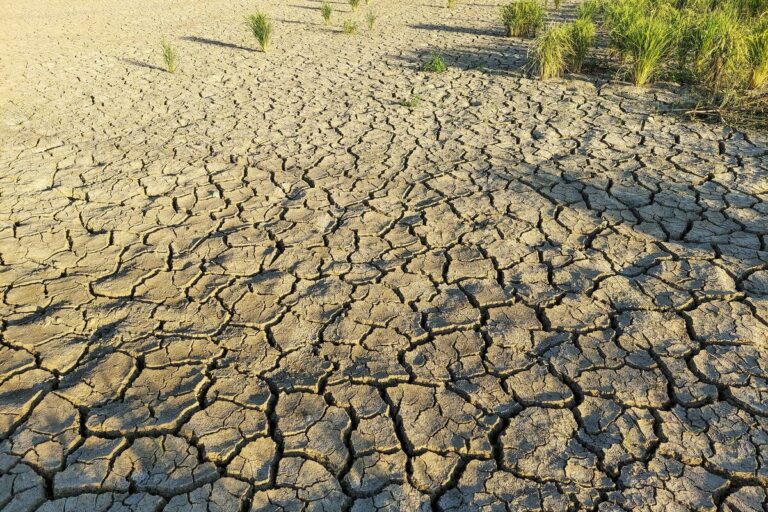
A fire needs fuel, heat, oxygen and a spark, and moisture is what usually keeps vegetation from igniting. Plants constantly lose water through evapotranspiration and normally replace it from the soil, humidity or rain. Warming raises the potential for evaporation, and when that outpaces rainfall, vegetation and soils dry out. Scientists also track the vapor pressure deficit, a measure of how strongly the air pulls moisture out of plants, which has been worsening as the climate warms.
Warmer temperatures also stretch the fire season, especially where snow is disappearing. In the western United States, earlier snowmelt and warming since the mid-1980s have been associated with longer and more severe fire seasons. Even the daily rhythm of fire is changing. Fires normally calm down at night, when air cools and humidity rises, but a study in Science Advances estimated that annual potential burning hours in North America rose 36% from 1975 to 2024 as those night-time brakes weakened.
The fires that are multiplying
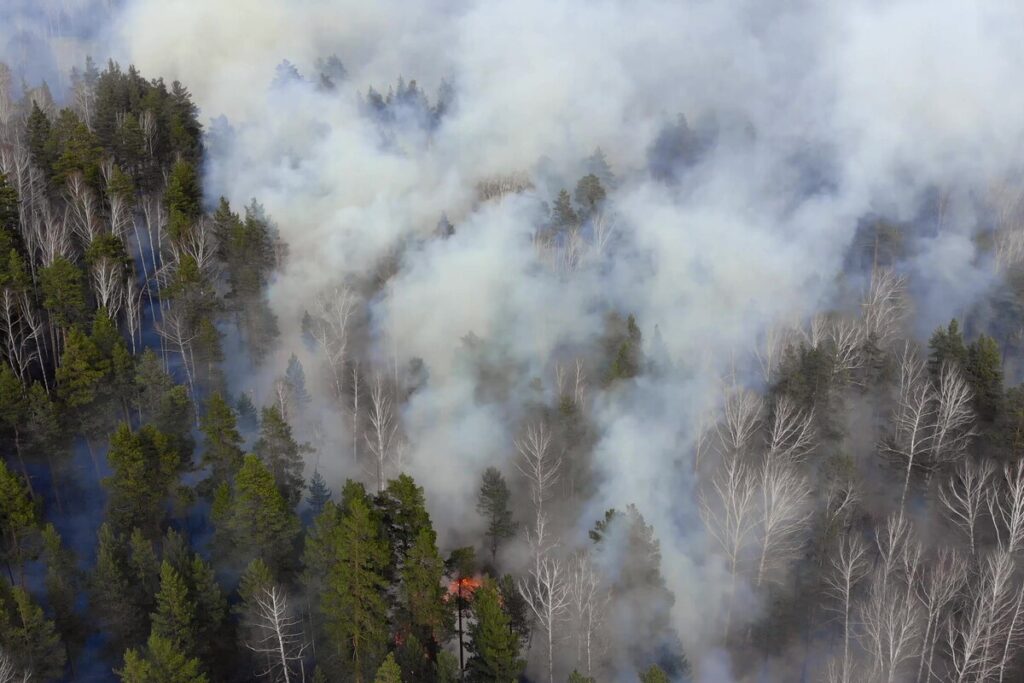
This is where the two trends meet. Fewer fires overall does not mean milder ones. A 2024 study estimated that the annual frequency of energetically extreme wildfires increased roughly 11-fold in temperate conifer forests and sevenfold in boreal forests between 2003 and 2023.
Boreal forests make up only a small share of the world’s burned area, but they contribute a large share of the carbon emitted by wildfires. Canada illustrates the scale: a record 18 million hectares burned there in 2023, with smoke affecting air quality thousands of kilometres away.
A century of putting fires out
Climate is not the only factor. In Canada and the United States, decades of suppressing lightning-caused fires have allowed fuel to build up compared with the more frequent fires of the past. The result has been fewer fires, but more severe ones that can kill even mature trees. One meta-analysis found that California burned about 17 times more land each year before 1800 (around 1,800,000 hectares a year) than in recent decades (around 102,000 hectares).
Common misunderstandings
- “Climate change starts the fires.” It mostly sets the conditions. More than 85% of wildfires in the United States are started by human activity, such as power lines, equipment sparks and campfires.
- “Arson is the main cause.” Arson may account for over 20% of human-caused fires, but in California it is generally 6 to 10% of fires each year, and false arson claims spread widely during the 2019-20 Australian and 2023 Canadian fire seasons.
- “All fire is damage.” Many ecosystems evolved with fire. Some seeds need heat to germinate, and burned forests can host high levels of biodiversity. Other places, like the chaparral of southern California, suffer from fires that come too often.
Why this matters for the climate
Wildfires also feed back into the climate. The carbon they release adds to greenhouse gas concentrations, and climate models do not yet fully reflect this feedback. In June and July 2019 alone, fires in the Arctic emitted more than 140 megatonnes of CO2, roughly what 36 million cars emit in a year. In the Amazon, drought, logging and cattle ranching damage fire-resistant forest and encourage flammable brush, creating a cycle that favours more burning.
The encouraging part is that fire is something people have managed for a very long time. Controlled burns, defensible space around homes and traditional practices such as Aboriginal Australian fire-stick farming, still used in Kakadu National Park to support biodiversity, all aim at the same goal: keeping the fires that do happen smaller and less intense. Understanding the paradox of less land burned but more extreme fires is a useful first step in seeing why those tools matter.