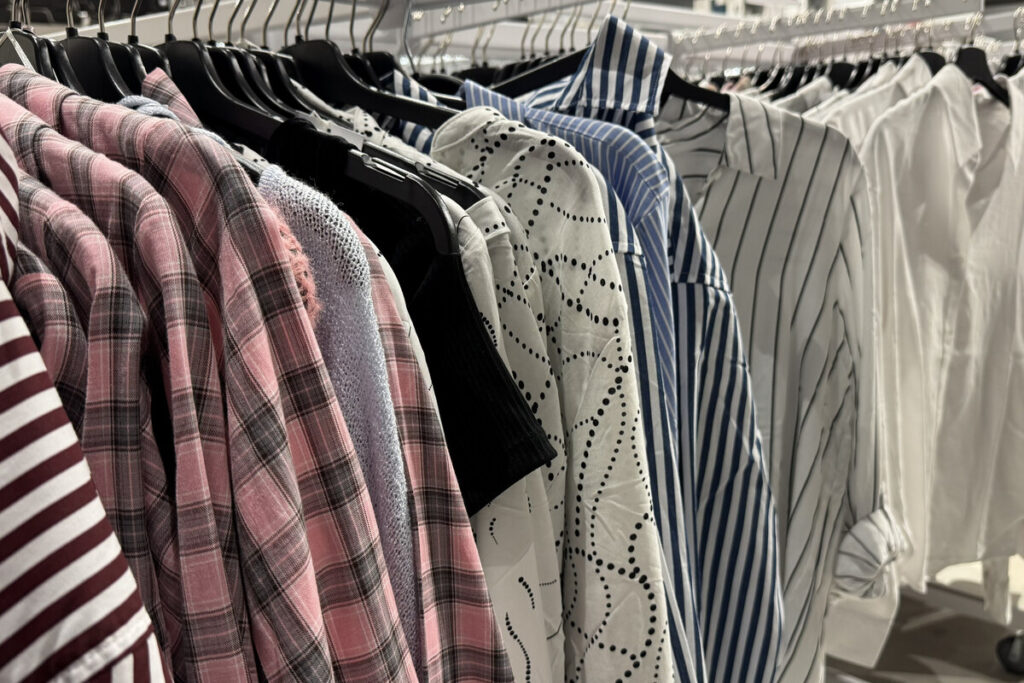
A T-shirt that costs less than a sandwich and is gone from the shelves in a few weeks: that is the everyday face of fast fashion. But the label says little about what actually makes the model “fast”, or why the number of times you wear a garment may matter more than where it was bought.
What makes fashion “fast”
Merriam-Webster describes fast fashion as “an approach to the design, creation, and marketing of clothing fashions that emphasizes making fashion trends quickly and cheaply available to consumers.” In practice, brands copy the latest styles and get them into stores at low prices, using cheap and fast mass production.
The speed comes from how the business is organised. Companies make clothes in small batches, keep spare manufacturing capacity and adjust production quickly based on what sells. That is very different from the traditional four-season calendar, where designers worked months ahead to guess what customers would want.
How the model grew
Before the 19th century, making clothes meant sourcing wool, cotton or leather, weaving it and sewing it by hand. The Industrial Revolution, with sewing machines and textile machinery, made garments cheaper. Fast fashion as we know it took shape in the 1960s with companies such as Inditex and Chelsea Girl, then accelerated in the late 20th century with efficient supply chains, low-cost labour in Asia and cheaper petroleum-based synthetic fibres.
In the 2010s and 2020s, social media added another gear. Trends now spread through Instagram, Pinterest and TikTok, and “haul” videos can trigger impulse purchases. The even faster version of the model is sometimes called ultra-fast fashion.
The numbers behind the label
Around 36% of clothing purchases worldwide now fall into the fast fashion category, in a market estimated at about $178 billion a year. It also supports roughly 60 to 70 million jobs, and economists note that apparel manufacturing has often been a first step toward industrialisation in lower-income countries. Many shoppers also value being able to afford on-trend pieces.
The environmental picture is where volume matters. According to the United Nations Environment Programme, people buy about 60% more clothing than in the past while keeping each garment about half as long. The same source says the equivalent of one truckload of textiles is landfilled or incinerated every second. A 2020 scientific review estimated that the fashion industry generates more than 92 million tonnes of waste and uses around 79 trillion litres of water a year, and the sector is often put at 2 to 8% of global greenhouse gas emissions.
Why wearing a garment longer changes the maths
A 2026 life cycle assessment of fast-fashion T-shirts found about 9.62 kg of CO2 equivalent for a polyester one and 6.10 kg for a cotton one, under the conditions studied. The same work estimated that extending a garment’s lifespan could cut its emissions by roughly 50%. A 2024 study of jeans reached a similar conclusion from another angle: per wear, fast-fashion jeans carried a footprint 11 times higher than traditional fashion consumption.
The reason is simple. Most of the footprint is spent before the garment ever reaches you, so each extra wear spreads that cost over more use. A cheap item worn twice can end up costing the planet more per wear than a pricier one worn fifty times.
Nuances and open questions
The picture is not one-sided. Shein, for example, argues that making what customers are already inclined to buy leaves fewer unsold items, and that its customers often rewear pieces or pass them on. Researchers, though, argue that lasting progress needs lower production volumes, better practices along the supply chain and longer-lived garments.
Microplastics are another sticking point. The European Environment Agency estimates that 200,000 to 500,000 tonnes of microplastics from textiles reach the oceans each year, and synthetic fabrics tend to shed more fibres in their first washes. Reuse, better collection and recycling help reduce waste, but they do not fully stop that shedding.
A wider view
Fast fashion is less a single product than a pace: how quickly clothes are designed, bought and replaced. Looking at it that way makes the question more practical. Instead of asking only where a garment comes from, it can be just as useful to ask how many times it will actually be worn.