Carbon dioxide gets most of the attention in climate conversations, and for good reason. But methane, a gas that only stays in the atmosphere for about a decade, packs a surprisingly strong punch over the short term. Understanding why comes down to one idea: global warming potential.
Not all greenhouse gases are created equal
Greenhouse gases are components of the atmosphere that trap heat and raise the surface temperature of a planet like Earth. They do this by absorbing the infrared radiation given off by the ground. The two most abundant gases in the air, nitrogen and oxygen, don’t absorb this radiation at all, which is why they play no part in the greenhouse effect.
The five most abundant greenhouse gases are, in order, water vapor, carbon dioxide, methane, nitrous oxide and tropospheric ozone. In 2019, carbon dioxide stood at 410 parts per million, while methane was measured at 1,866 parts per billion. In raw quantity, methane is a small player. In warming power, it’s a different story.
How the greenhouse effect works
Experiments in the late 19th century established that carbon dioxide and water vapor absorb infrared radiation, while nitrogen and oxygen don’t. The mechanism is fairly simple: the sun warms Earth’s surface, the surface re-emits energy as infrared radiation, and greenhouse gases absorb part of it. They then re-emit that energy in every direction, including back toward the ground. Instead of escaping straight to space, some of the heat stays in the climate system.
The word “greenhouse” was first applied to this atmospheric phenomenon by Nils Gustaf Ekholm in 1901.
What global warming potential measures
Because each gas absorbs heat differently and stays in the air for a different length of time, scientists compare them with a common yardstick: global warming potential (GWP) expresses how much warming a tonne of a gas causes compared with a tonne of carbon dioxide over a set period.
The time window matters a lot. For methane, the figures look like this:
- Over 20 years (GWP-20): 81.2
- Over 100 years (GWP-100): 27.9
- Over 500 years (GWP-500): 7.95
Short-lived but powerful
Methane stays in the atmosphere for 12.4 years on average. Carbon dioxide behaves very differently: there is no single lifetime for it, because the carbon cycle is so complex, but around 80% of emitted CO2 lingers for centuries to millennia. Nitrous oxide sits in between, with a lifetime of 121 years.
Put those facts together and the picture becomes clearer. Over a 20-year window, one tonne of methane has the same warming effect as 81.2 tonnes of carbon dioxide. Because methane breaks down relatively quickly, that multiplier shrinks as the time window grows, which is why it falls to 7.95 over 500 years.
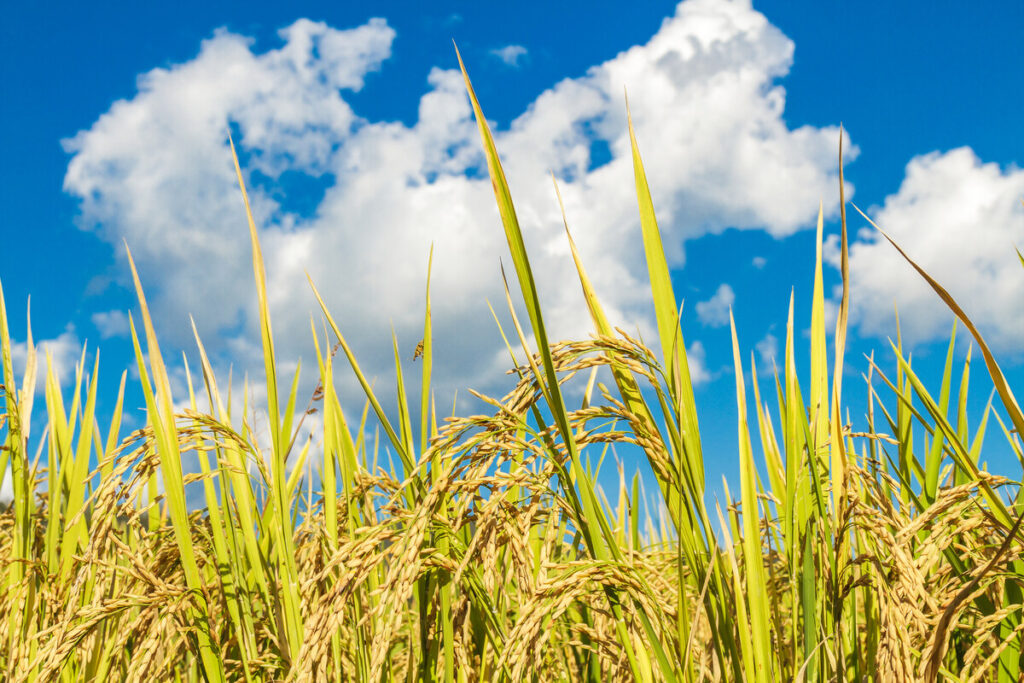
This is also why cutting methane emissions, for example from rice paddies or livestock, can have a relatively fast effect on warming in the short term. Rice paddies alone account for 22% of agricultural methane emissions and 11% of agricultural nitrous oxide emissions.
The trend explains the growing interest: since preindustrial times (around 1750), the concentration of methane in the atmosphere has risen by 150%, compared with a rise of more than 50% for carbon dioxide.
Common misunderstandings
The first is assuming that greenhouse gases are roughly interchangeable, tonne for tonne. They aren’t: even on the standard 100-year scale, methane is 27.9 times more powerful than carbon dioxide.
The second is overlooking water vapor. It is the most abundant greenhouse gas and contributes the most to the natural greenhouse effect, between 41% and 67%, even though human activity doesn’t emit it directly in the same way it emits CO2.
The third runs in the other direction: methane’s punch doesn’t make carbon dioxide less important. Because a large share of CO2 persists for centuries to millennia, its effect keeps building over the long run in a way methane’s doesn’t.
Two gases, two timelines
Human activities currently emit around 53.6 gigatonnes of CO2 equivalent per year, on average over 2014 to 2023. That single total brings very different gases together, and seeing methane and carbon dioxide on their own timelines helps make sense of it: methane is a lever with a relatively quick response, while carbon dioxide shapes the long-term picture. Neither replaces the other, and knowing the difference makes climate headlines a lot easier to read.