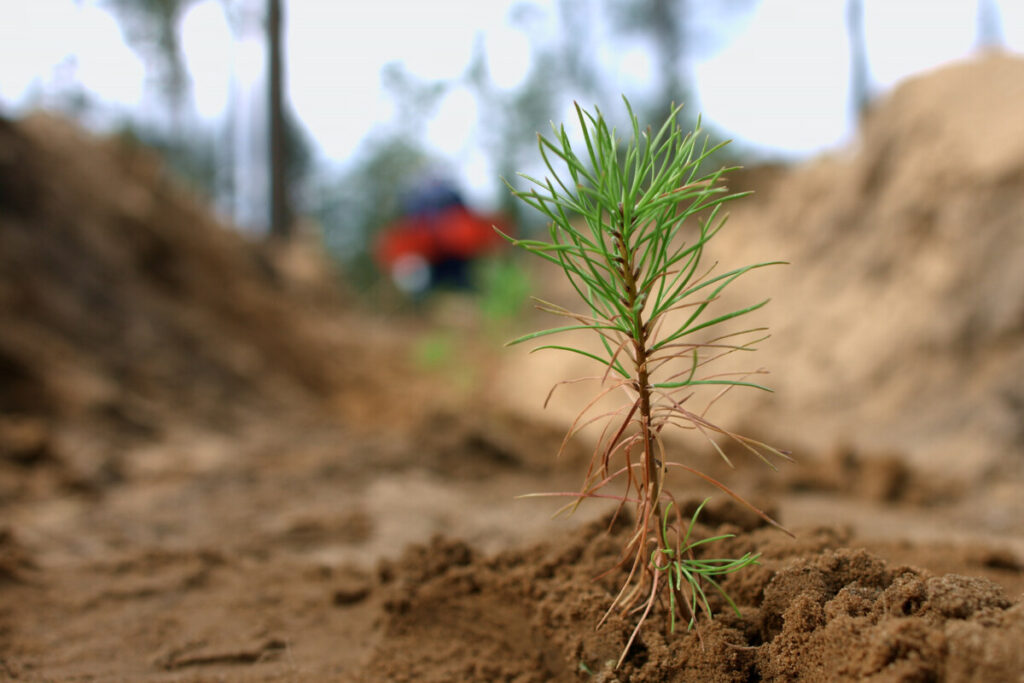
Tree planting has become one of the most popular climate ideas around, from national campaigns counting trees by the billion to global pledges. It does real good. But a row of freshly planted saplings and a living forest are not the same thing, and the gap between the two explains why scientists treat tree planting as a useful tool rather than a shortcut.
Reforestation, afforestation and natural regeneration
Three terms often get blended together. Reforestation means bringing forest back to land that used to be forest before it was converted to another use. Afforestation means creating forest where there wasn’t one before, for example on abandoned farmland or natural grassland. And then there is the option most people forget: natural regeneration, where a forest grows back on its own.
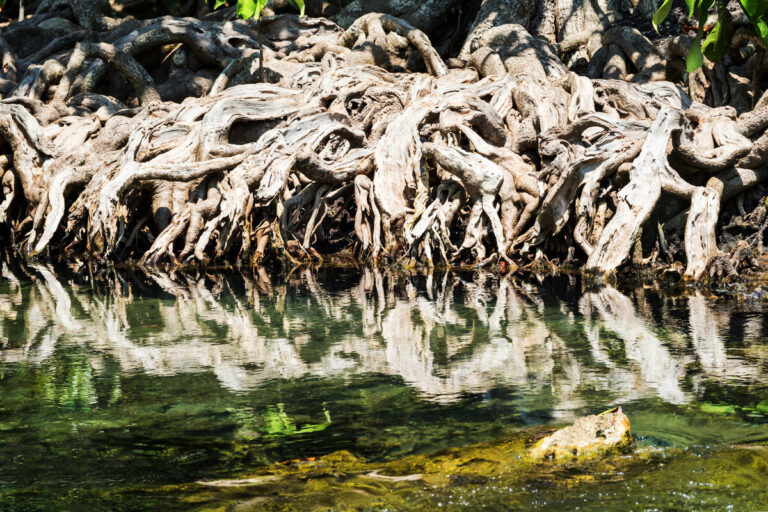
That last one is far from marginal. More than 90% of the world’s forests regenerate naturally. Approaches such as farmer-managed or assisted natural regeneration work with what is already in the ground, pruning and coppicing existing root systems instead of planting new seedlings.
Why trees matter so much for the climate
Forests are one of the planet’s main carbon sinks: they absorb roughly 25% of human carbon emissions every year. That is why growing more of them looks like such an obvious answer, and why countries have set ambitious targets.
Some of those efforts have changed entire landscapes. China launched its Great Green Wall program in 1978, and its forest coverage grew from about 10% in 1949 to around 25% in 2024. Costa Rica doubled its forest cover in 30 years, between 1989 and 2019, largely by paying landowners for the ecological services their forests provide. Pakistan’s “Billion Tree Tsunami”, launched in 2014, restored 350,000 hectares of forests and degraded land.
Where the picture gets more complicated
The first catch is time. A young plantation takes several decades before its climate benefits match those of a mature tropical forest. That is why the research points to a clear conclusion: “reducing deforestation is usually more beneficial for climate change mitigation than is reforestation.” In other words, keeping an existing forest standing generally does more for the climate than cutting it down and replanting later. As our look at cattle ranching in the Amazon showed, the pressure to clear forests is still very real.
The second catch is what gets planted. Most reforestation takes the form of single-species plantations, which support far less biodiversity than a mixed natural forest. Some species even work against their surroundings: Eucalyptus globulus, for instance, pulls large amounts of moisture from the soil and prevents other plants from growing.
The third catch is purpose. Plantations can produce 20 to 30 cubic meters of wood per hectare per year, compared with 1 to 3 for natural forests, so many are designed for timber. Nearly half of the pledges made under the Bonn Challenge, a major international restoration commitment, cover areas earmarked for commercial wood use. Wood that is harvested, or a plantation lost to fire or an insect outbreak, can release the carbon it was counted on to store.
Common misunderstandings
One frequent assumption is that more trees is always better, wherever they go. In practice, tree planting competes for water and land with food production and grazing. A World Resources Institute map of restoration opportunities drew criticism for including around 900 million hectares of grasslands, which are valuable ecosystems in their own right.
Another is that restoration is only a technical question. Almost 300 million people live on land identified as tropical forest restoration opportunities in the Global South, which is why researchers stress including local communities in any project.
A tool worth using well
None of this means tree planting is a bad idea. Planted forests grew from 4.1% to 7.0% of global forest area between 1990 and 2015, and 82% of them use native species rather than exotic ones. Examples like Costa Rica show forests can genuinely come back. The useful question is less “how many trees?” and more “which trees, where, for what purpose, and alongside protecting the forests we already have?”