Thawing permafrost is often described as a carbon time bomb waiting to go off. The reality is less dramatic but still important: the frozen ground of the Arctic is slowly releasing carbon, scientists broadly agree it will not cause runaway warming, and its biggest effects may be felt on the ground itself.
What permafrost actually is
Permafrost is soil, rock or sediment that stays below 0 °C for at least two years in a row. It ranges from less than a metre thick to more than 1,500 metres in parts of Siberia.
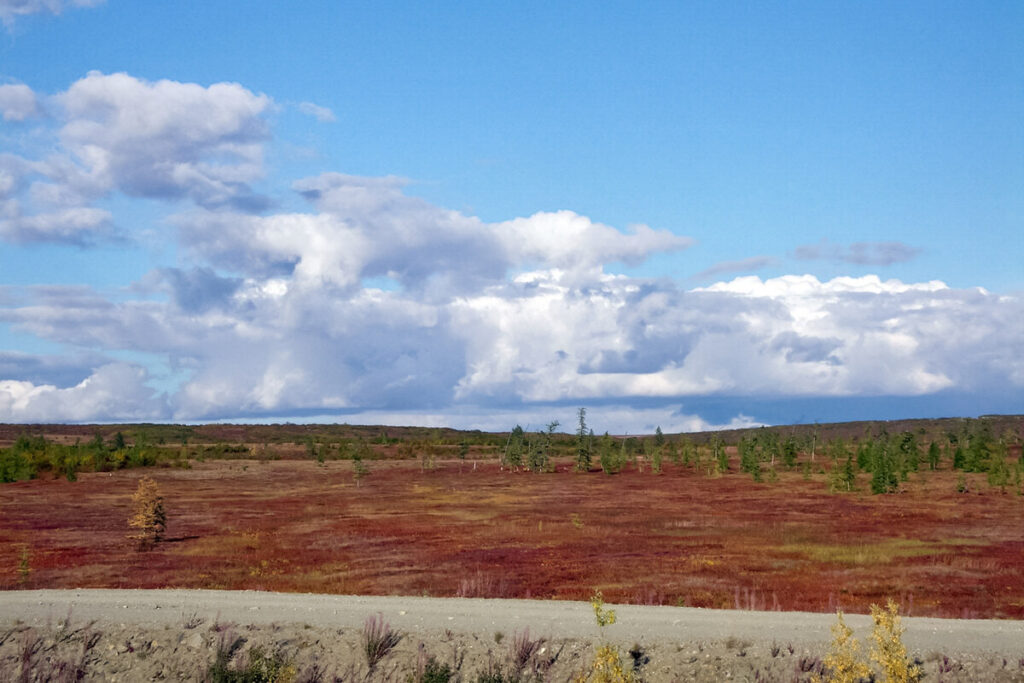
It covers around 18 million square kilometres, roughly 11% of the world’s land surface, mostly across Alaska, Canada, Greenland, Siberia and the Tibetan Plateau. On top sits the active layer, a band of soil that freezes and thaws every year and is the only part where plant roots can grow.
The English word itself dates from a 1943 report by US geologist Siemon William Muller, a shortened form of “permanently frozen ground”. As early as 1953, his colleague Inna Poiré warned that the name gave a misleading impression of stability, and some researchers now suggest “perpetually refreezing” would be closer to the truth.
Why thawing ground releases carbon
For thousands of years, dead plants and other organic matter have piled up in frozen soil without fully decomposing. That makes the tundra a carbon sink. Once the ground thaws and warms enough, decomposition starts again.
Depending on conditions, decomposition releases either carbon dioxide (when oxygen is present) or methane (when it is not). Because those gases add to the warming that caused the thaw in the first place, permafrost is a textbook example of a positive climate feedback.
The change is already measurable. Permafrost warmed by about 0.3 °C between 2007 and 2016, and the average depth of the active layer in the Northern Hemisphere grew from about 127 cm in 2000 to about 145 cm in 2018.
Big carbon store, smaller release
The numbers behind the alarming image are real. Northern permafrost holds 1,400 to 1,650 billion tonnes of carbon, about twice as much as the atmosphere contains today.
But only a fraction of it is expected to escape. Even under a high emissions scenario with more than 4 °C of global warming by 2100, about 5 to 15% of permafrost carbon is expected to be lost, spread over decades and centuries. Part of that will also be offset as the Arctic “greens” and larger shrubs and trees absorb more carbon, although scientists consider it very unlikely this could cancel out all of it.
To put the release in context, a major 2022 review found that if warming is held to 2 °C, average yearly emissions from permafrost this century would be similar to Russia’s emissions in 2019. On a path closer to current trends, slightly under 3 °C, they would be comparable to those of Western Europe or the United States. In temperature terms, one 2018 study estimated that gradual thaw would add around 0.09 °C by 2100 in a 2 °C world.
What people often get wrong
It is not a single global switch
Permafrost thaw is sometimes listed among climate tipping points because local thaw is effectively irreversible. Whether it counts as a global tipping point is debated, since overall thaw tends to progress gradually with warming rather than all at once. Abrupt, widespread collapse of permafrost areas could occur at around 4 °C of warming.
Methane punches above its weight
Only a small share of permafrost carbon is expected to leave as methane, yet that methane could cause 40 to 70% of the warming linked to thaw this century, because it traps far more heat than CO2 over a few decades.
The ground matters as much as the gas
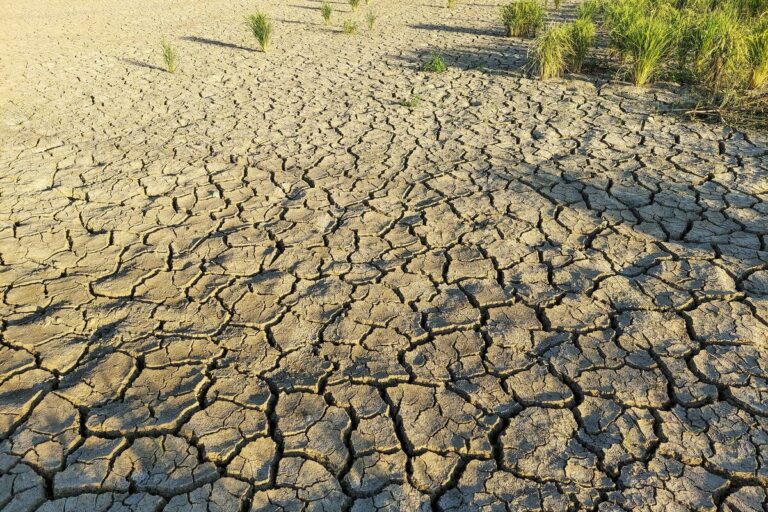
Ice-rich soil can sink or collapse when it thaws. In 2021, 1,162 settlements home to about 5 million people sat directly on Arctic permafrost, and by 2050 the ground beneath 42% of them is expected to thaw. Engineers have long adapted, from the wooden pile foundations pioneered in Norilsk to the heat pipes that keep the soil frozen under the Trans-Alaska Pipeline.
A slow change worth watching
Permafrost is less a doomsday trigger than a long, steady amplifier: it adds to warming in proportion to how much warming happens. Studies suggest that keeping emissions in line with the Paris Agreement would stabilise infrastructure risks after mid-century.