Every few winters, a “polar vortex” gets the blame for a deep freeze. But the vortex is not a storm that arrives and leaves: it is a permanent feature of the atmosphere, and what makes the headlines is what happens when it weakens.
What a polar vortex actually is
A polar vortex is a large region of cold, rotating air that encircles each of Earth’s poles, spinning in the same direction as the planet. The name covers two distinct phenomena that are easy to mix up.
The stratospheric polar vortex is a band of fast winds roughly 15 to 50 kilometres up. It forms in autumn, when the pole cools rapidly as the polar night begins, and it breaks down in spring. The tropospheric polar vortex sits lower, from the surface up to about 10 to 15 kilometres, and exists all year, although it is also strongest in winter when the polar regions are coldest.
Why the cold spills south
When the Arctic vortex is strong, it has a well-defined, nearly circular shape, and the cold air stays contained near the pole. When it weakens, it can split into two or more smaller vortices, and the flow of Arctic air becomes disorganized. Masses of cold air can then push toward the equator, bringing a rapid, sharp drop in temperature.
In other words, the vortex does not travel south. A weakened vortex lets some of its cold air escape. The same logic works in the Southern Hemisphere, where a weak vortex lets the jet stream buckle and brings a sudden “cold snap”. In Australia, this is known as a “polar blast” or “polar plunge”.
The 2019 freeze and a misused term
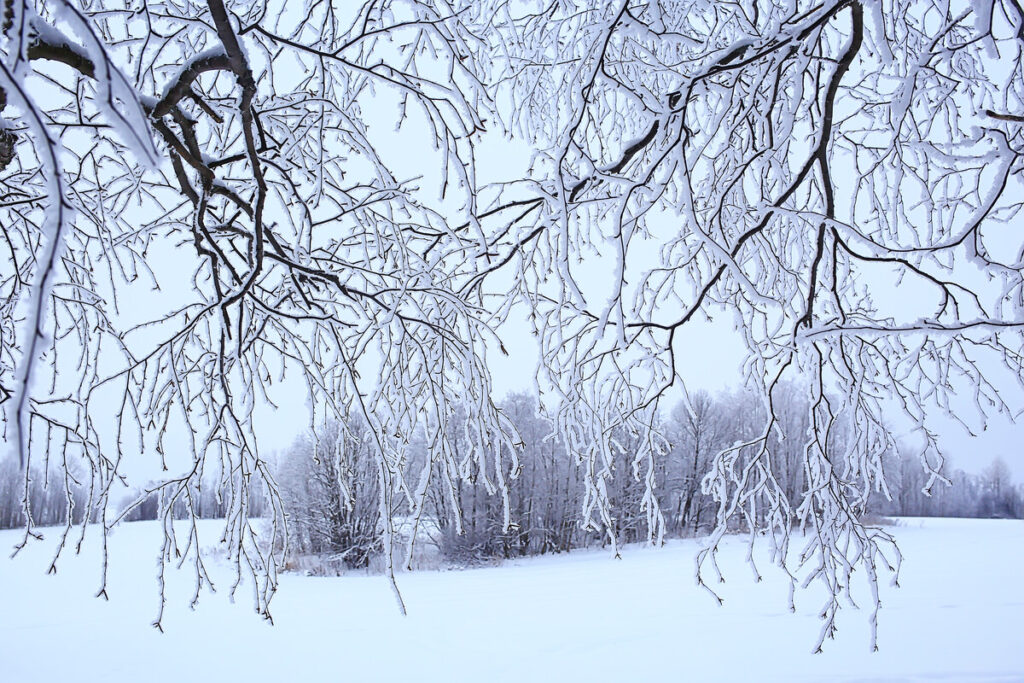
The term became a household phrase during the cold North American winter of 2013 to 2014. In late January 2019, a deep freeze gripped much of the United States and Canada, with wind chills just above -50 °F (-45 °C). Frostbite was possible within just 10 minutes outdoors, and hundreds of schools, colleges and universities closed.
Many accounts blamed “a polar vortex”, which is not the scientifically correct use of the term. What reached North America was an outbreak of cold Arctic air caused by a weakened vortex. Earlier cold winters in the United Kingdom (2009 to 2010 and 2010 to 2011) were described in much the same way.
When the vortex breaks down
Sometimes the stratospheric vortex breaks down entirely in mid-winter. This event is called a sudden stratospheric warming, and the air high above the pole can warm by 30 to 50 °C (54 to 90 °F) in just a few days. Scientists first spotted these events in 1952, using balloon-borne radiosondes at altitudes above 20 kilometres.
In 2001, researchers found a statistical correlation between a weak polar vortex and outbreaks of severe cold in the Northern Hemisphere. A correlation is not a guarantee, which is one reason forecasters talk about shifted odds rather than certainties.
Where climate change fits in
When extremely cold weather hit the central United States in 2021, some newspapers linked it to climate change. Scientists have since identified interactions between the polar vortex, the jet stream and several other factors, including Arctic sea ice decline, reduced snow cover and North Atlantic Oscillation anomalies. The picture is more intricate than a simple “cold snap versus warming” debate, and it is still an active area of research.
A single cold week, then, says little by itself. It tells you how the winds around the pole behaved that week, not what the long-term average is doing.
A vortex with a chemical side effect
The polar vortex also matters for the ozone layer. Inside the Antarctic vortex, polar stratospheric clouds can only form below about -80 °C. Their chemistry, combined with chlorofluorocarbons, destroys ozone when sunlight returns in spring. That effect has been weakening since the 2000s, and ozone is expected to return to 1980 levels around 2075.
So the next time a forecast mentions the polar vortex, remember that it was there all along. The news is not that it exists, but that its grip on the cold has loosened.