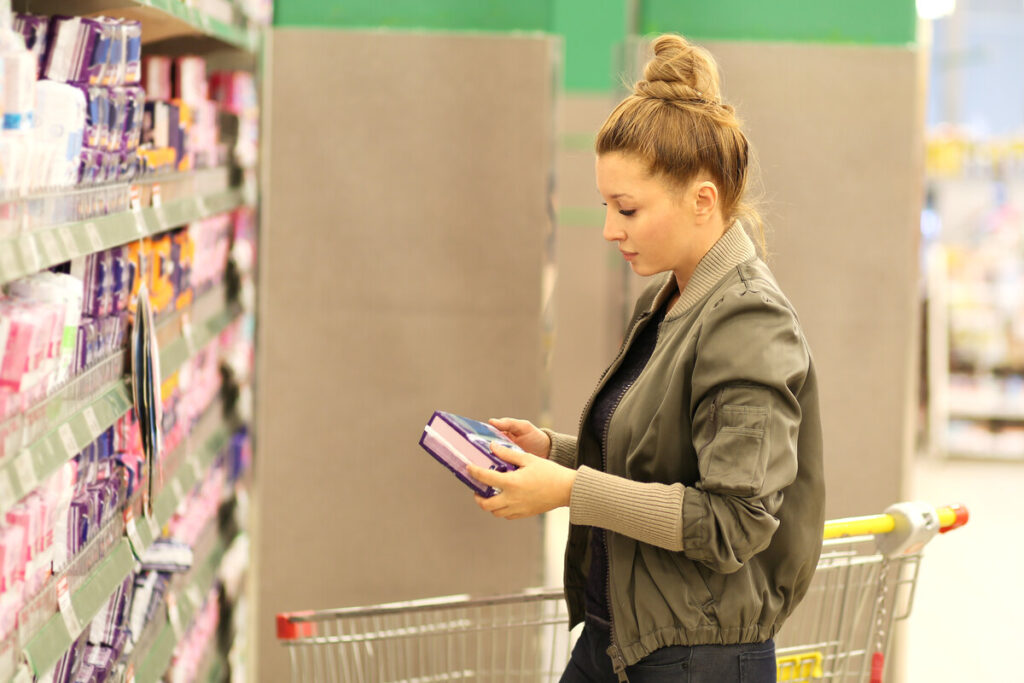
There are now around 456 ecolabels in 199 countries, according to the Ecolabel Index, the largest global directory of them. They all promise to make greener shopping easier, but they don’t all promise the same thing. Some are checked by an independent body against a long list of criteria, while others are simply a company describing its own product.
What an ecolabel actually is
An ecolabel is a labeling system for food and consumer products that helps shoppers take environmental concerns into account. Most are voluntary. They differ from “green stickers,” which are required by law: in North America, for example, major appliances carry a mandatory energy label showing how much electricity they use.
Behind many ecolabels sits a sustainability standard, a set of good practices for a sector such as farming, forestry or fishing. Through certification, a farm or fishery shows that it meets the standard and earns the right to sell its products as certified.
The three types defined by ISO
The International Organization for Standardization (ISO) sorts environmental labels into three categories in its ISO 14020 to 14025 series, according to what they cover and how rigorous the award process is.
Type I: independent and multi-criteria
Type I labels (ISO 14024) are voluntary programs assessed by an independent third party that looks at the product’s impacts across its whole life cycle. The awarding body is either a government organization or a private non-commercial one. The EU Ecolabel, the Nordic Swan and Germany’s Blue Angel are all Type I.
Type II: the company’s own claim
Type II labels (ISO 14021) are self-declared claims made by manufacturers or retailers, with no third-party audit. They are not necessarily false, but nobody outside the company has checked them.
Type III: the numbers, without a verdict
Type III labels (ISO 14025) are environmental product declarations. Instead of judging whether a product is “good,” they publish quantified data on its life cycle impacts, so that buyers can compare products for themselves. They rely on the same kind of analysis described in our guide to the life cycle assessment.
Single-issue labels sit in between
Some well-known labels focus on just one environmental or social aspect. These “Type I-like” labels may work on a pass/fail basis, such as setting a maximum level of energy use for electrical appliances, as Energy Star does. The Forest Stewardship Council describes its own label as “Type I-like,” since it focuses on responsible forest management.
A concrete example: from the Blue Angel to the EU Ecolabel
The first ecolabel in the world was Germany’s Blue Angel (Der Blaue Engel), created in 1978. In 1992, the European Commission set up the EU Ecolabel, now the only pan-European official Type I ecolabel. Its criteria are agreed by experts, industry, consumer organizations and NGOs, and compliance is verified by independent third parties.
Energy labels show how this works in practice. In Canada, federal law requires the EnerGuide label on all new electrical appliances, with figures from standardized tests verified by a third-party agency. In the United States, the yellow EnergyGuide label estimates energy use and annual operating costs, while appliances that meet strict criteria set by the Environmental Protection Agency can carry the blue Energy Star label.
Where ecolabels fall short
Trust is the main issue. Some manufacturers and industry associations have set up “rubber stamp” labels to greenwash their products. Research also shows that consumers tend to prefer ecolabeled products while not fully understanding or trusting the labels themselves.
Seafood is a good illustration. Many conservationists feel that the growing number of seafood labels is confusing shoppers. In May 2019, class-action lawsuits against Bumble Bee Foods, Chicken of the Sea and StarKist claimed that their tuna cans were labeled “dolphin-safe” even though the companies used drift nets or purse seine nets known to harm dolphins.
Scope matters too. A typical appliance energy label documents how much energy the product uses while running, not the energy used to manufacture it. Carbon emission labels take a different approach, looking at greenhouse gas emissions rather than direct energy use.
How to read a label with more confidence
The simplest question to ask is who did the checking. The highest level of trust comes from a government-recognized certification mark that also complies with ISO 14024, including a life cycle analysis. A company’s own logo is a starting point, not a guarantee.
Rules are tightening as well. In March 2023, the European Commission proposed a Green Claims Directive that would require the verifiers of environmental claims to be accredited. Knowing the three types already turns a wall of logos into something much easier to read.