When people picture rising seas, they usually imagine melting icebergs. The real picture is more interesting: warmer water simply takes up more space, floating ice barely counts, and in some places it is the land, not the sea, that is moving. Here is what actually drives sea level rise, and why it varies so much from one coast to another.
How fast sea levels are rising
Sea levels have been creeping up since the end of the last ice age, about 20,000 years ago, but they stayed almost constant for the last 2,500 years. Between 1901 and 2018, the global average sea level rose by roughly 20 cm, a pace faster than at any point in at least the past 3,000 years.
The rate is also picking up. According to the World Meteorological Organization, the global rate reached 4.62 mm per year over 2013 to 2022, more than double the 20th-century average of 1.7 mm per year. Human-caused climate change is the main reason for this acceleration.
Warmer water takes up more space
Melting ice is only part of the story. Between 1993 and 2018, melting ice sheets and glaciers accounted for 44% of sea level rise, while 42% came from the thermal expansion of seawater. Put simply, when water warms, it expands, and a slightly larger volume of ocean means a slightly higher surface.
The ocean is a huge heat store. It absorbs more than 90% of the extra heat trapped in the climate system, and the amount of energy that warms the average ocean by just 0.01 °C would warm the atmosphere by about 10 °C. Since 1950, the ocean has warmed by about 0.7 °C, enough on its own to add more than 15 cm to sea levels.
Not all melting ice raises the sea
Where the ice sits makes all the difference. Ice that is already floating, such as sea ice and icebergs, has displaced its own weight in water, following what is known as Archimedes’ principle. Melting it changes the level only very slightly, because meltwater is a little less salty and less dense than seawater. If every floating ice shelf and iceberg on Earth melted, the sea would rise by only about 4 cm.
Ice on land is a different matter. The Greenland and Antarctic ice sheets hold about 99.5% of the planet’s land ice, with a combined potential of more than 65 metres of sea level rise, although melting all of it would take many thousands of years. Mountain glaciers hold less than 1% of glacier ice, yet because they are small and vulnerable, they contributed around 40% of sea level rise during the 20th century. Arctic sea ice still matters for climate, but through the way it reflects sunlight, not through the water it adds.
When the land sinks, the sea rises
Sea level is always measured relative to the land, so a sinking coastline experiences rising water even if the ocean stays put. The two main causes are groundwater pumping, which leaves cavities that compress, and shifting tectonic plates. On the US Gulf Coast, land is sinking by about an inch every five to ten years.
Jakarta is the most striking example. Some parts of the city sank by up to 28 cm per year between 1982 and 2010, and in 2019 the Indonesian government committed to moving the country’s capital elsewhere. Nine of the 20 coastal cities expected to face the highest flood losses by 2050, including Bangkok and Ho Chi Minh City, are considered sinking cities.
Why it is not the same everywhere
A global average hides big local differences. When an ice sheet loses mass, its gravitational pull on the surrounding ocean weakens, so water levels can drop nearby while rising more than average far away. Meanwhile, around Hudson Bay in Canada and the northern Baltic Sea, relative sea level is actually falling, because the land is still slowly rebounding after the weight of ice age glaciers was lifted. On the US East Coast, by contrast, sea levels are rising at three to four times the global average.
What this means for coastal planning
Because the oceans respond to warming with a delay of decades, sea levels will keep rising faster until about 2050 whatever happens next. After that, emissions make a large difference: with very deep cuts, the rise would slow down in the second half of the century.
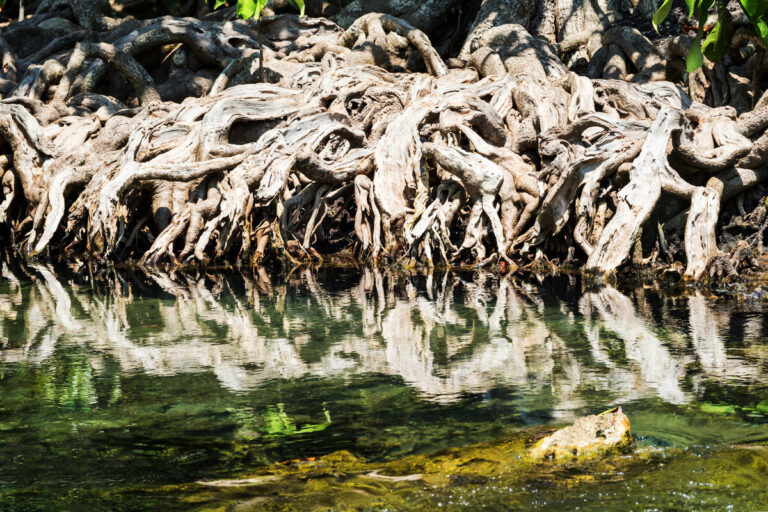
The Netherlands, has extended its Delta Works program with wider dunes and stronger dikes, while Fiji is restoring mangroves and coral reefs as a more cost-efficient alternative to sea walls. Understanding the separate causes, from warming water to sinking ground, is what allows each coast to choose the response that fits its own situation.