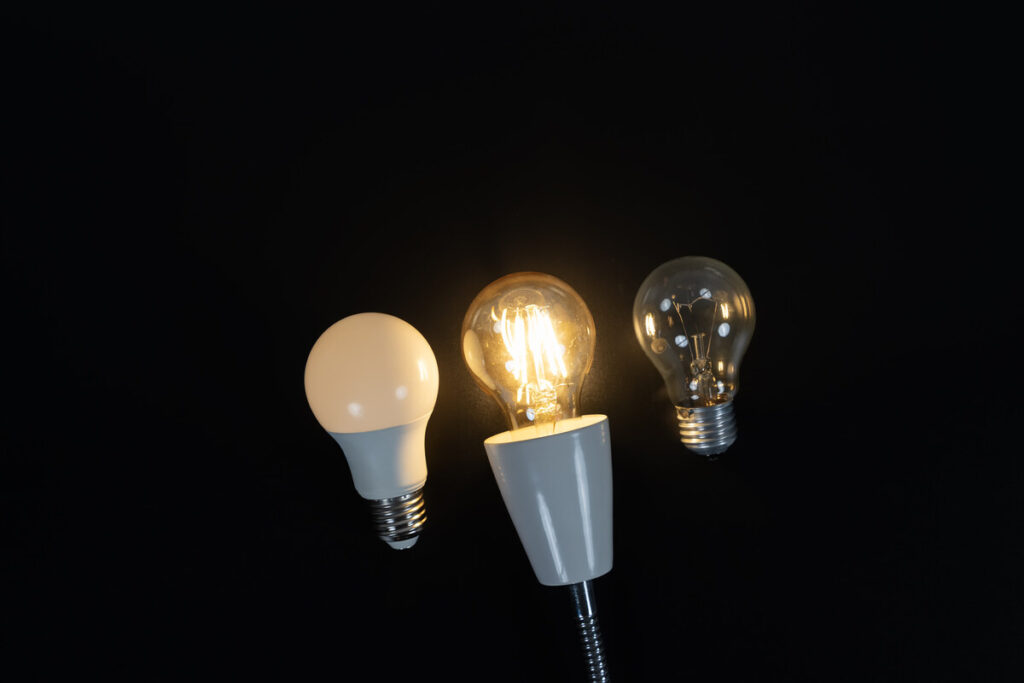
It is a common objection to LED bulbs: an old incandescent bulb at least warms the room, so the energy isn’t really wasted. The idea has a grain of truth, but it explains less than it seems, and it depends heavily on where you live.
Where the electricity in an old bulb goes
An incandescent bulb makes light by heating a thin filament until it glows. Its luminous efficacy is only about 10 to 17 lumens per watt, which means that most of the electricity it draws leaves as heat rather than light. A typical bulb also lasts around 1,000 hours.
LED lamps work differently: a semiconductor emits the light directly. The best commercial LED lamps now exceed 200 lumens per watt and turn more than half of the power they draw into light. Light output fades only gradually over their life, and the best models are rated for 30,000 hours or more.
So does the lost heat help or hurt?
Both, depending on the season and the climate. The heat from an incandescent bulb does warm the room, which can reduce heating demand in cold weather. In warm weather the same heat has to be removed, so it increases the demand for cooling.
A 2008 report compared two cities: in Los Angeles, where incandescent lighting adds to air conditioning, the electricity savings from switching to efficient bulbs paid back the cost of the new bulbs four times faster than in Vancouver, where the lost heat helps warm homes. Even so, the report found a net saving in all climates once outdoor lighting and summer air conditioning were counted. In colder places, some of the lighting savings can be offset by extra heating, so the gain is smaller there, not absent.
A concrete example
In 2009, the large Christmas tree in front of Turku Cathedral in Finland was hung with 710 LED lamps of 2 watts each. Although they stay on for only about 48 days a year, the lamps were calculated to pay for themselves in three and a half years. The US Department of Energy’s L Prize had a similar goal: a replacement for the 60 W bulb that would use just 17% of the energy.
Where old bulbs’ heat still has a job
There are a few cases where the warmth is the point. Incandescent bulbs melt snow and ice on warning lights and signs in cold climates, heat the wax in lava lamps and keep egg incubators warm. These are small niches, and none of them describes a normal living room.
What to watch for when you switch
- Light quality. LED color rendering isn’t identical to incandescent light, so check the color temperature on the box: “warm white” is closer to the old yellowish glow, while “daylight” is bluer.
- Dimmers. The circuits in LED lamps have to be designed to be dimmable and compatible with the particular dimmer, otherwise the lamp or the dimmer may be damaged.
- Lifetime claims. A typical domestic LED lamp is rated at about 15,000 hours, roughly 15 years at 3 hours a day, but in the United States there are no standardized testing procedures to prove such claims, so labels like Energy Star, which test for life expectancy and consistency, are a useful check.
A bigger picture
The heat from a bulb is a by-product, not a heating system, and it appears whether or not you need it. Swapping to LED isn’t a miracle fix for a household’s energy use, but it is one of the simplest changes to make: the same light for a fraction of the power, with a bulb that may outlast the lamp it sits in.