A fridge never switches off, and that is why, in a home without air conditioning, it uses more energy than any other household device. The good news: what makes one fridge thirstier than another is surprisingly concrete.
Why a quiet appliance adds up
A fridge is a thermally insulated box with a heat pump that moves heat out of it. Because it runs around the clock, even a modest power draw accumulates. The range is wide: the most efficient unit made in the United States uses about half a kilowatt-hour per day (roughly 20 watts running continuously), some small units use less than 0.2 kWh per day, and large models with a big freezer and an ice maker can use as much as 4 kWh per day, about 170 watts around the clock.
Are newer fridges really better?
Yes, on average. Energy Star qualified models in the United States use 50% less energy than the average 1974 model, and 21st-century fridges are typically three times more efficient than those of the 1930s. In the European Union, a mandatory letter-based label rates models, with A the most efficient.
The history holds a twist, though. Many fridges from the 1930s and 1940s were more efficient than the ones that followed. Features such as automatic defrosting added energy use, and after the Second World War, style mattered more than efficiency. In the 1970s, side-by-side models with ice dispensers became popular, and insulation was often thinned to cut the size of the case and the cost of making it.
What shapes the energy use of a fridge
- Design: a chest freezer opens from the top, which limits the convection that lets warm, moist air flood in. In-door ice dispensers do the opposite and increase heat leakage.
- The compressor: digital inverter compressors vary their speed instead of repeatedly switching on and off, which reduces consumption compared with a single-speed motor.
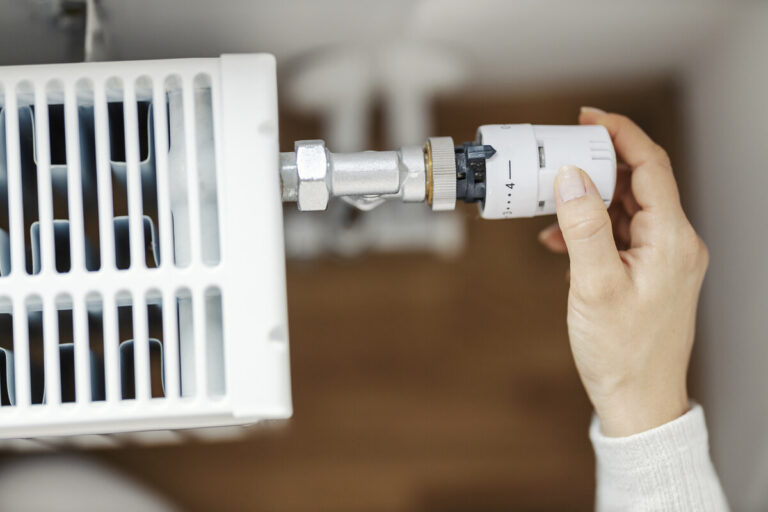
- The setting: manufacturers often label dials from 1 to 9 with arbitrary numbers, but 3 to 5 °C (37 to 41 °F) is generally ideal for the fridge compartment and −18 °C (0 °F) for the freezer.
Small upkeep, real effect
For an older fridge, a few simple actions can improve efficiency:
- defrost and clean it regularly, if it is a manual defrost model
- replace door seals that have deteriorated
- avoid setting the thermostat colder than needed: a fridge does not usually need to be colder than 4 °C (39 °F)
- clean dust from the condenser coils, which blocks heat flow, and leave space around the unit for air to circulate
An Australian scheme shows how far this can go: the Phoenix programme collected old fridges, refurbished them with new door seals and a thorough cleaning, and passed them on to low-income families. The refurbished units were over 10% more efficient.
The refrigerant matters too
Energy is only part of the picture. Early refrigerants such as CFCs damaged the ozone layer. Modern fridges often used HFC-134a, which spares the ozone layer but is still a potent greenhouse gas, and it is becoming rarer in Europe. The main refrigerant now is R-600a (isobutane), which has a smaller effect on the atmosphere if released. Old units also need careful disposal, since CFC-bearing insulation is a concern in itself.
The takeaway
Replacing a working fridge is not automatically the greener move, and the sources here do not put a number on that trade-off. What they do show is that size, extras such as ice makers, the age of the seals, dust on the coils and the temperature setting all shape the bill. Checking those first is a gentle place to start.