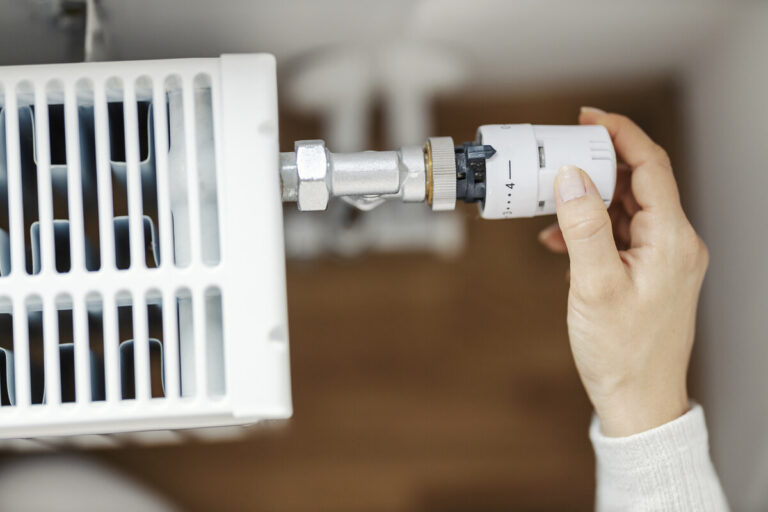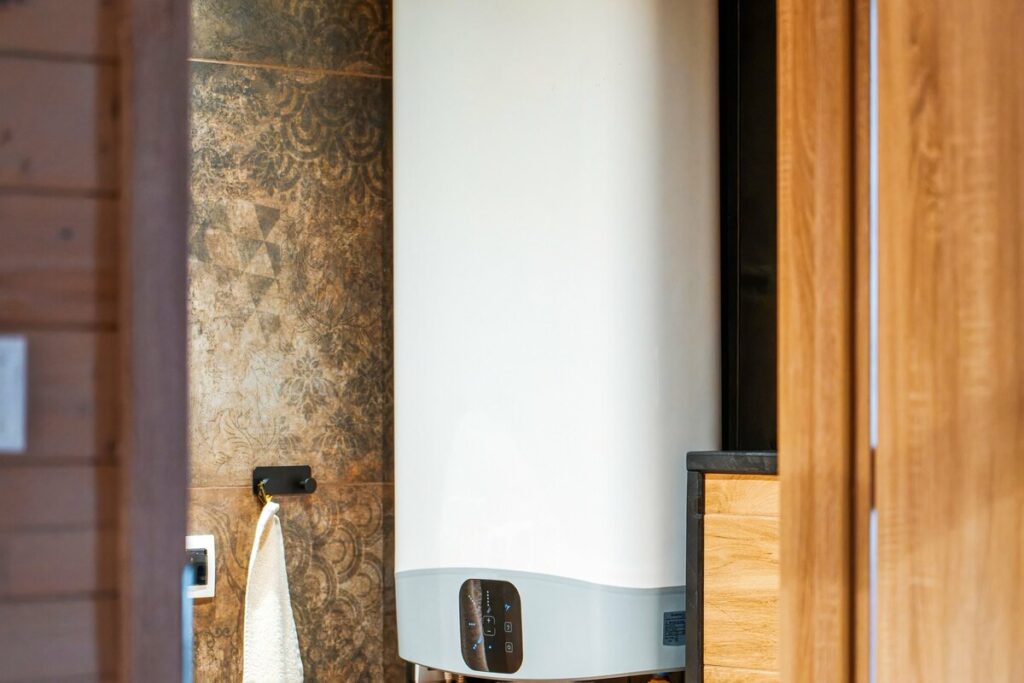
A tankless water heater skips the standby losses of a tank, but heating water still takes a surprising amount of energy, and the type of heater is only part of the story.
Tankless heaters, also called instantaneous or on-demand heaters, are often described as the efficient choice. They heat water only as it flows through the device and keep no hot water in reserve. A storage heater does the opposite: it holds 75 to 400 litres (20 to 100 US gallons) of hot water in a tank, and over time heat escapes through the tank wall, so the heating system has to switch on again to bring the water back up.
Power and energy are not the same thing
Warming water is demanding in itself. Water often arrives at about 10 °C (50 °F) and is used at around 50 °C (122 °F), so the heater has to add roughly 40 °C. For 230 litres (60 US gallons), that takes about 39,840 BTU, close to 11.7 kWh, at 90% efficiency.
Here is where the two designs differ. A 46 kW tankless gas heater could deliver that energy in about 15 minutes. A typical 4.5 kW electric tank element needs around 2.3 hours. The tankless unit has far more power, but the energy needed to heat the water is similar. That is also why a standard 120 V household outlet can warm only about 0.64 litres of water per minute by 40 °C: tankless units need a very powerful energy source.
What tankless really saves, and what it costs
The main advantages are an endless supply of hot water and potential energy savings under some conditions, mostly by avoiding standby loss. The main drawback is price. A US study in Minnesota reported a 20 to 40 year payback for tankless heaters, and one comparison with a less efficient gas tank found that on-demand gas could cost 30% more over its useful life. Better insulation on a storage tank also narrows the gap, because it reduces the heat that leaks away.
The fuel and the technology matter more
Efficiency figures depend on what you measure. Electric resistance heaters can reach recovery efficiency of about 98% at the tap, while gas heaters reach 82 to 94%, and high-efficiency condensing units convert up to 98% of the fuel’s energy by capturing heat that would otherwise go up the flue. But electricity has to be generated first: a thermal power station typically converts only about 40% of its fuel into electricity, so direct resistance heating may be the least efficient option overall.
Heat pump water heaters change that picture. They move heat rather than create it, and Energy Star heat pump units have an energy factor of 200% or higher. In the United States, an 80-gallon electric storage heater must reach an energy factor of 197% under the 2015 standard, which is only possible with heat pump technology. With a low-carbon electricity source, emissions fall further.
Small habits still count
Usage patterns can help too. According to the source, the energy used by an electric water heater can fall by as much as 18% with scheduling and temperature control based on how the household actually uses hot water. And in places such as Cyprus and Israel, about 90% of homes already use solar water heating.
So which one is better?
There is no single answer. A tankless unit makes the most sense where hot water use is occasional or spread across several points, or where continuous flow matters. A well-insulated tank, or better still a heat pump model, can be the more efficient choice for steady daily use. The useful question is less “tank or tankless?” than “what energy source, how efficient, and how much hot water do we really need?”