Swapping plastic carrier bags for a sturdy cotton tote feels like an obvious green choice. The reality is more interesting: a reusable bag only becomes the better option once it has been used many times, and how you use the bags you already own matters more than which material you pick.
Why the answer is not as simple as plastic vs cotton
A lightweight plastic carrier bag has a poor reputation, mostly because of litter and because so few are recycled: only around 5 to 6% of plastic bags end up recycled, and they usually cannot go in curbside bins, only in drop-off points that accept plastic film. Yet when researchers compare bags across their whole life cycle, from raw materials to disposal, the thin plastic bag scores better than its image suggests.
The reason is simple. Making anything costs energy and materials, and a thin plastic bag uses very little of both. A heavier reusable bag starts life with a much larger footprint, which it then has to “pay back” through repeated use.
How life cycle studies compare bags
One widely cited estimate puts the gap in plain numbers: one reusable bag requires about as much energy to make as 28 traditional plastic shopping bags, or eight paper bags. That is the head start a reusable bag has to make up.
Canada’s recycling agency, Recyc-Québec, reached a similar conclusion in a 2017 analysis, noting that “the conventional plastic bag has several environmental and economic advantages” and that, being “thin and light, its production requires little material and energy.” Government studies from Denmark and the UK, along with a 2014 Clemson University study, came to similar conclusions.
The practical takeaway from these comparisons is that some reusable bags need to be used more than 100 times before they become better for the environment than single-use plastic. Some non-plastic alternatives can even produce more greenhouse gas emissions than plastic bags if they are not reused enough.
A concrete example: the cotton tote
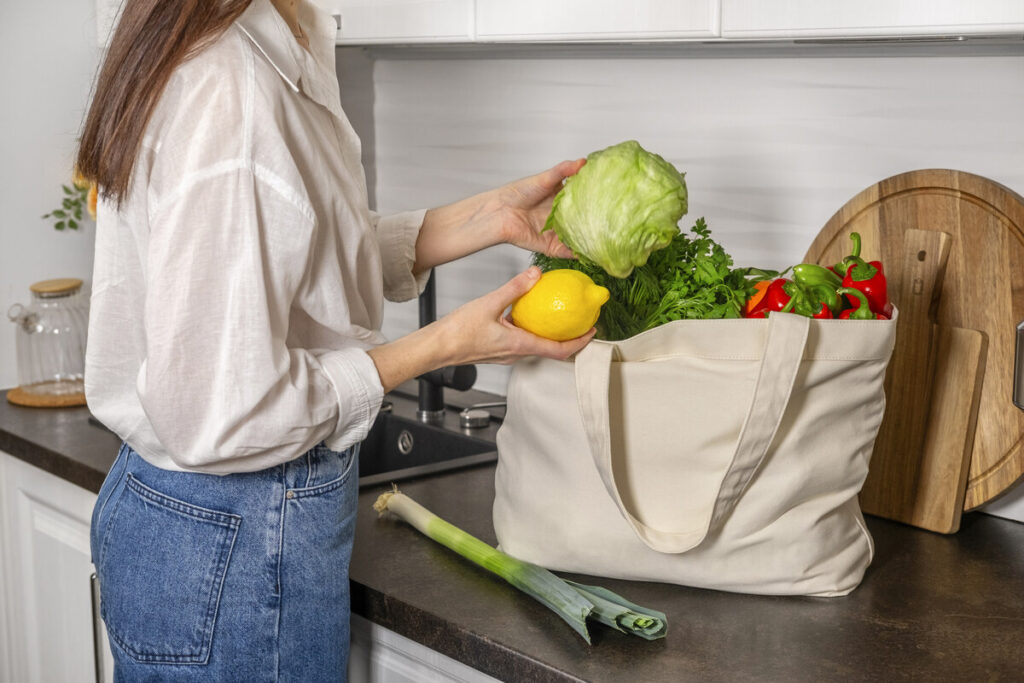
Cotton is where the gap is most visible. A study by the UK Environment Agency found that the average cotton bag is used only 51 times before being thrown away. If a bag needs well over 100 uses to break even, a tote retired after 51 trips has not yet paid back the resources that went into it.
This does not make cotton a bad material. It means the tote that sits in a drawer, or the tenth free promotional bag collected at events, carries a cost that is never recovered. The tote that goes to the shop every week for years is a very different story.
Common misunderstandings
“Single-use” bags are rarely used just once
Plastic carrier bags are reused on average 1.6 times before being discarded. Recyc-Québec found that a high share of them (77.7%) get a second life as bin liners, which avoids buying dedicated garbage bags. One side effect observed after bag bans is exactly that: sales of trash bags can rise significantly once free carrier bags disappear.
Bans and charges can change behaviour, with some trade-offs
Charges have been strikingly effective at cutting use. Ireland’s €0.15 levy, introduced in March 2002, led to a 90% reduction in plastic bag use within weeks, and plastic bag use at major UK retailers has fallen by 97% since 2014. But design matters: California’s 2014 ban exempted thicker plastic bags sold as “reusable”, and plastic bag waste in the state rose from 157,385 tons in 2014 to 231,072 tons in 2021.
Bioplastic is not automatically the greener option
A 2009 study by a German environmental research institute found that the bioplastic bags available at the time had less favourable environmental profiles than the other materials examined, a reminder that “compostable” on a label does not settle the question on its own.
Reusable bags need the occasional wash
A small 2010 US study found that most users never washed their bags and detected bacteria in many of them. Consumer Reports criticised the small sample but suggested washing bags from time to time and keeping raw meat, poultry and fish separate.
What this means for your shopping bags
The useful question is not “which material is best?” but “how many times will this bag be used?”. In most cases the greenest bag is the one you already own, used for as long as it holds together, while plastic bags you do end up with can still earn their keep as bin liners. It is the same life cycle logic behind the waste hierarchy and the broader question of what sustainable packaging actually means: the impact of an object depends less on what it is made of than on how long it stays in use.