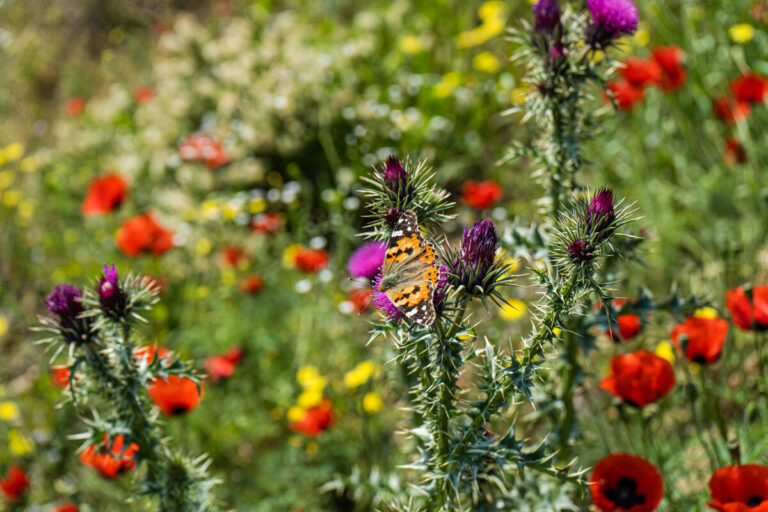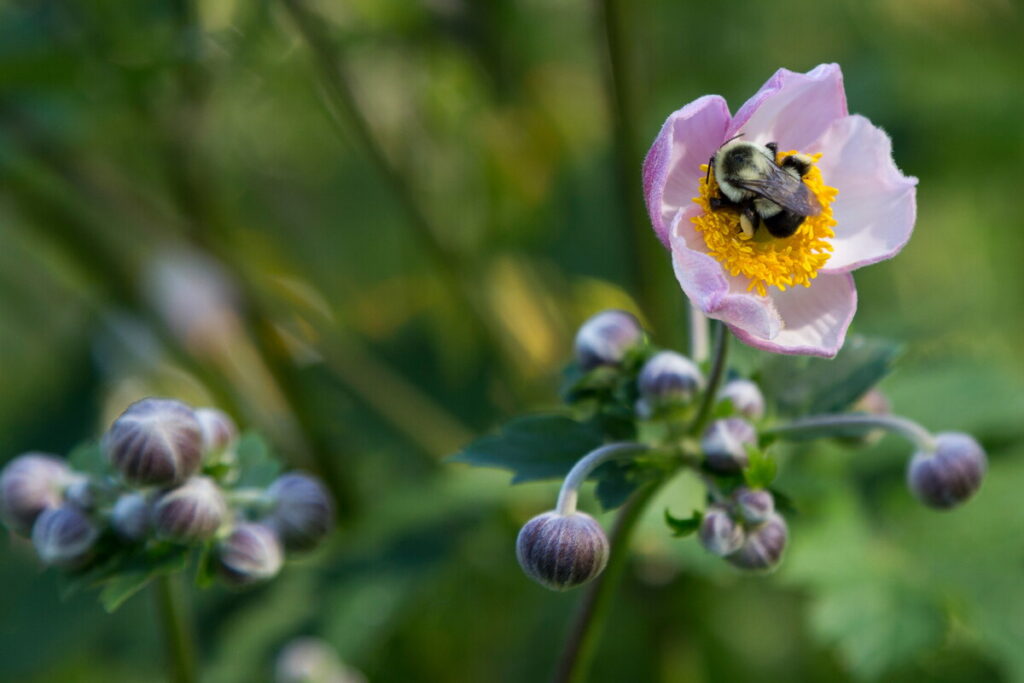
When people hear “bee decline”, they usually picture honey bees in a hive. The data tells a more layered story: managed honey bee numbers have actually grown worldwide, while wild pollinators, from native bees to hoverflies and butterflies, are the ones showing clear declines.
Managed bees and wild bees are two different stories
Between 1985 and 2005, the number of managed honey bee colonies in Europe fell by 25%. In North America, colonies fell by 59% between 1947 and 2005. Yet global honey bee stocks went up, because countries such as China and Argentina added many more hives.
Wild pollinators have no beekeeper to replace them. A 2021 study described as the first long-term assessment of global bee decline analysed more than a century of records and found that the number of bee species fell steeply after the 1990s, shrinking by a quarter in 2006 to 2015 compared with the period before 1990. Most studies focus on honey bees and bumblebees, with fewer on hoverflies and butterflies, so the picture for some groups is still thin.
What is behind the decline
There is rarely a single cause. The proposed explanations include pesticides, parasites and pathogens, habitat destruction, climate change, and competition with invasive species. Neonicotinoids are described as the most widespread pesticide class linked to harm in bees. The Varroa mite can inject the Deformed Wing virus directly, and a warming climate can make bees emerge when few plants are in flower.
Honey bees themselves are an invasive species across most of the world where they have been introduced, and their steady growth in numbers may possibly reduce native species. Even air pollution plays a part: pollutants such as ozone bind quickly to flower scent molecules, so the scents travel shorter distances and pollinators must search longer to find flowers.
How much do crops really depend on them?
This is where the story needs nuance. Seven of the ten most important crops by volume, including maize, rice, wheat, potatoes and sugar cane, are wind-pollinated or propagate vegetatively, so they do not need animal pollinators. Still, an estimated 87.5% of flowering plant species are animal-pollinated, and 60% of crop species use animal pollinators, including most fruits and many vegetables.
In a dome experiment on fifteen plant species said to depend on animals, only three suffered reduced seed set when pollinators were excluded. The expected direct loss in total US agricultural production without animal pollination is 3 to 8%. And so far, the theorised decline has had no effect on overall food production: yields of animal-pollinated and non-animal-pollinated crops have risen at the same rate.
The nutritional angle is more specific. One study estimated that 70% of dietary vitamin A worldwide comes from animal-pollinated crops, along with 55% of folate. A 2015 model of a total pollinator die-off, a purely hypothetical scenario, projected a 22.9% drop in the global fruit supply.
What researchers say would help
Several scholars have called for the precautionary principle to be applied. A 2021 global assessment of the drivers of decline concluded that “global policy responses should focus on reducing pressure from changes in land cover and configuration, land management and pesticides”. Around 18 US states have passed legislation covering awareness, research, pesticides, habitat protection and beekeeping.
The takeaway
“Save the bees” is a simpler message than the evidence supports. Honey bee hives can be rebuilt by beekeepers, while wild pollinators depend on habitat and on how land is managed. The decline is well documented in Europe and North America, with similar findings from South America, China and Japan, yet its effects on food supply are still modest so far.