Switching to cloth diapers feels like an obvious green choice, but the largest study on the question found something more interesting: the answer depends less on the diaper than on the washing machine.
A child goes through several thousand diapers. An estimated 27.4 billion disposable ones are used each year in the US alone, adding up to a possible 3.4 million tons of used diapers in landfills annually. A discarded disposable diaper takes about 450 years to decompose. Those numbers explain why parents have looked to reusable alternatives since the late 1980s, when cloth diaper use re-emerged after disposables took over in the 1960s.
What counts as a cloth diaper today
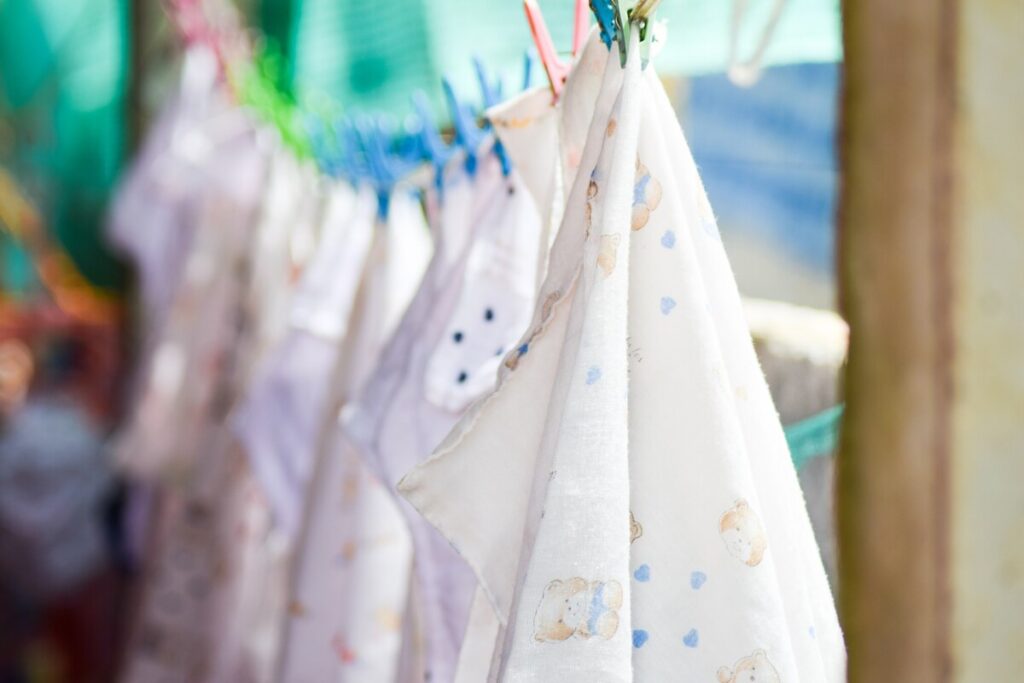
Modern reusable diapers are far from the pins and plastic pants of the past. They come as fitted diapers, pocket diapers with removable inserts, all-in-ones with a waterproof outer layer, and hybrids that take either a cloth or a disposable insert. Most are made of cotton, though bamboo and hemp are also used. Marion Donovan, a Connecticut homemaker, helped start the shift in 1946 with a waterproof cover for cloth diapers, held shut with plastic snaps instead of safety pins.
What the big UK study found
The most cited comparison is a 2008 life cycle assessment by the UK Environment Agency and the Department for Environment, Food and Rural Affairs. Its conclusion was that reusable diapers can cause significantly less damage (up to 40 percent) or significantly more damage than disposables, depending mostly on how parents wash and dry them.
In the baseline scenario, the difference in greenhouse gas emissions was insignificant, and disposables even scored slightly better. The report put it plainly: “in contrast to the use of disposable nappies, it is consumers’ behaviour after purchase that determines most of the impacts from reusable nappies.”
Where the water and energy go
Single-use diapers use less water than cloth diapers washed at home, but more than cloth diapers sent to a commercial diaper service. Washing at home takes roughly 50 to 70 gallons (about 189 to 264 litres) every three days, which is about the same as flushing a toilet 15 times a day, unless the household has a high-efficiency washing machine. A diaper service, by contrast, uses less water and energy per diaper than a single home laundry load, even though its delivery vehicle adds some pollution.
Small habits can double the footprint. Some people wash each load twice, treating the first cycle as a prewash, and that doubles the energy and water used for laundering.
Habits that tip the balance
The same report listed the changes that let reusable diaper users cut their impact:
- Line drying outside whenever possible
- Tumble drying as little as possible
- Choosing an energy efficient washing machine when replacing one
- Not washing above 60 °C (140 °F)
- Washing fuller loads
- Reusing the diapers on other children
That last point matters because a set of cloth diapers can last from birth through potty training and then serve a second child or be resold, which spreads the manufacturing impact over more use.
The cotton and cost questions
Cloth diapers are most commonly made of cotton, and conventional cotton is one of the most chemically dependent crops. It takes up about 10 percent of all agricultural chemicals and 25 percent of insecticides on 3 percent of arable land. Organic cotton, bamboo or hemp can soften that effect. Disposables have their own upstream costs: effluents from the plastic, pulp and paper industries are believed to be more hazardous than those from cotton growing and manufacturing, according to one study sponsored by a diaper service association, so the source of a study is worth keeping in mind.
Money tells a clearer story. An average baby uses an estimated $1,500 to $2,000 or more worth of disposable diapers before potty training, while a basic cloth set costs about $100 to $300 new, plus the cost of washing and drying.
So which one is greener?
Neither wins automatically. A cloth diaper dried on a line and reused on a second child sits at the favorable end of the range, while one washed twice and tumble dried hot may do worse than a disposable. For families, the useful question is not “cloth or disposable?” but “how will I wash them?”, and many choose a mix of both depending on the week.