Swapping a lawn for native plants is often sold as a way to stop watering, feeding and spraying for good. The reality is more interesting: native plants are tuned to local conditions, but only when those conditions still exist in your yard.
What “native” actually means
A native species is one that is indigenous to a region because it evolved there naturally, without human help. That is not the same as endemic, which describes a species found only in one place. A native plant can grow in many regions, and the word itself is a little blurry: nativity depends on time and on political borders, and ranges shift as climates change over long periods.
In gardening, the idea is called natural landscaping or native gardening: using local trees, shrubs, groundcover and grasses instead of imported ornamentals.
Why local plants can need less
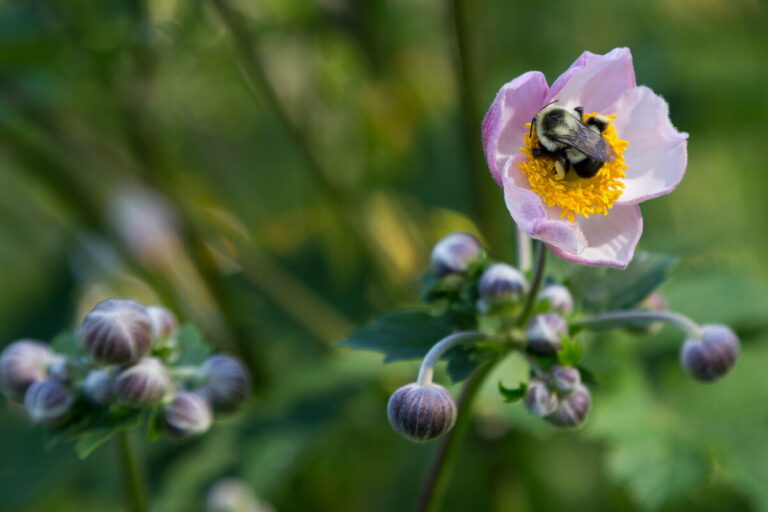
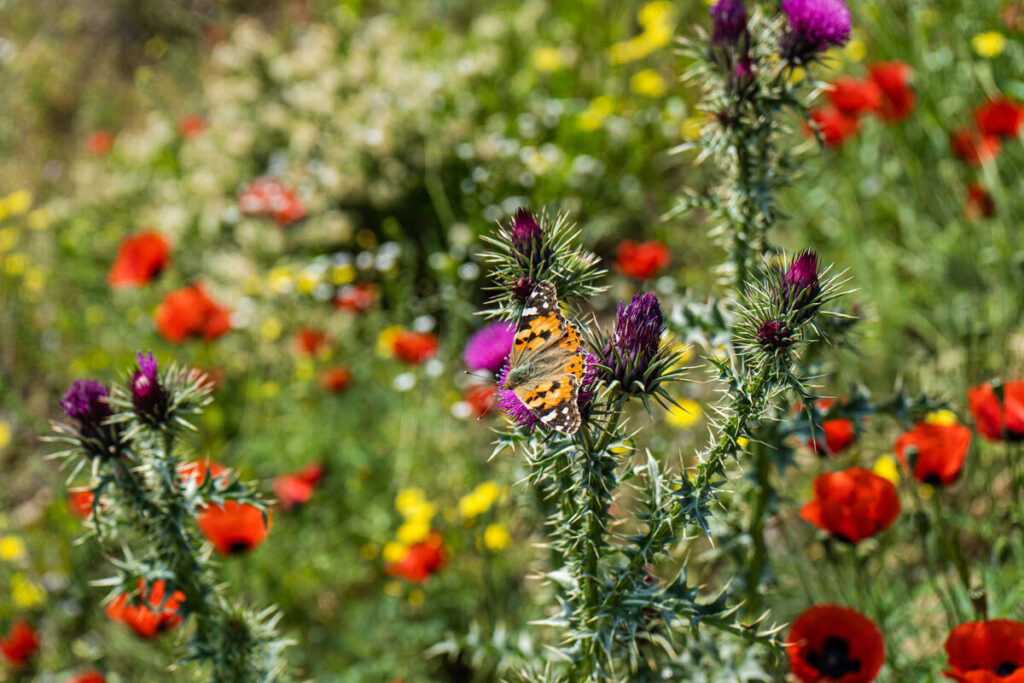
Over thousands of years, native plants have adapted to the local climate, soil and rainfall. Once established, many can thrive without irrigation or fertilizer and resist most local pests and diseases. They have also co-evolved with animals, fungi and microbes, so they form the foundation of local habitats: native butterflies, birds and pollinators know how to use them.
Deep roots add another benefit. Native wildflower and prairie plantings can soak up surface runoff, and a rain garden, a shallow planted depression that catches water from roofs and driveways, uses exactly that trait to let stormwater soak in instead of rushing into drains.
Why your yard may not be “local” anymore
Here is the catch. Native plants are adapted to the conditions of the wild landscape, and a typical yard is rarely that. Gardens often have:
- soil altered by building rubble, which can raise the pH
- shade from buildings that the local plants never evolved under
- rich, fertilized soil: many Australian plants, for example, are particularly sensitive to phosphorus
- no fire at all, even though many native plants are adapted to periodic wildfires (some gardeners imitate this by high mowing or a controlled burn every few years)
So “native” is a good starting point, but matching the plant to the actual spot matters just as much as matching it to the region. Even well-chosen plants may need some care while they get established.
A butterfly that depended on the right seed mix
The importance of getting nativity right shows up in a Californian example. In 1975, landscapers stabilized sand dunes at the western edge of Los Angeles International Airport with a “natural” seed mix. It was meant to prevent erosion, but the mix represented coastal sage scrub, a different plant community from the native dune scrub.
The El Segundo blue butterfly, whose population once covered about 3,200 acres of coastal dunes, became endangered. It began to recover only when the invasive California buckwheat was uprooted, allowing its original host plant, dune buckwheat, to regain some of its lost habitat. A native-looking mix was not the same as the right native community.
Where the debate gets nuanced
Native gardening has real trade-offs. A native planting is not suited to games that need manicured turf, may look less conventional because the plant choice is narrower, and in some areas wildfire risk is a genuine concern. Cultivars bred from native species are also “widely disputed” among native plant advocates.
Research adds another nuance. In Britain, the University of Sheffield’s BUGS project (Biodiversity in Urban Gardens in Sheffield) found that for many invertebrates, the majority of wild animals in most gardens, it is not only native plants that can sustain them. Ken Thompson’s book No Nettles Required shares those findings. Native plants remain a sound foundation, but a mix of structure, flowers, water and shelter also counts.
Making the most of the idea
A wildlife garden works best when it offers food, water, shelter and space, with layers from groundcover to shrubs and trees, plus leaf litter, log piles and water at varying depths. Removing invasive species and favoring plants from the pre-existing local ecology tends to make the garden easier to keep, not harder.
The takeaway: native plants are less a maintenance shortcut than a way of working with what a place already does well. Start by finding out what grew there before the buildings did.