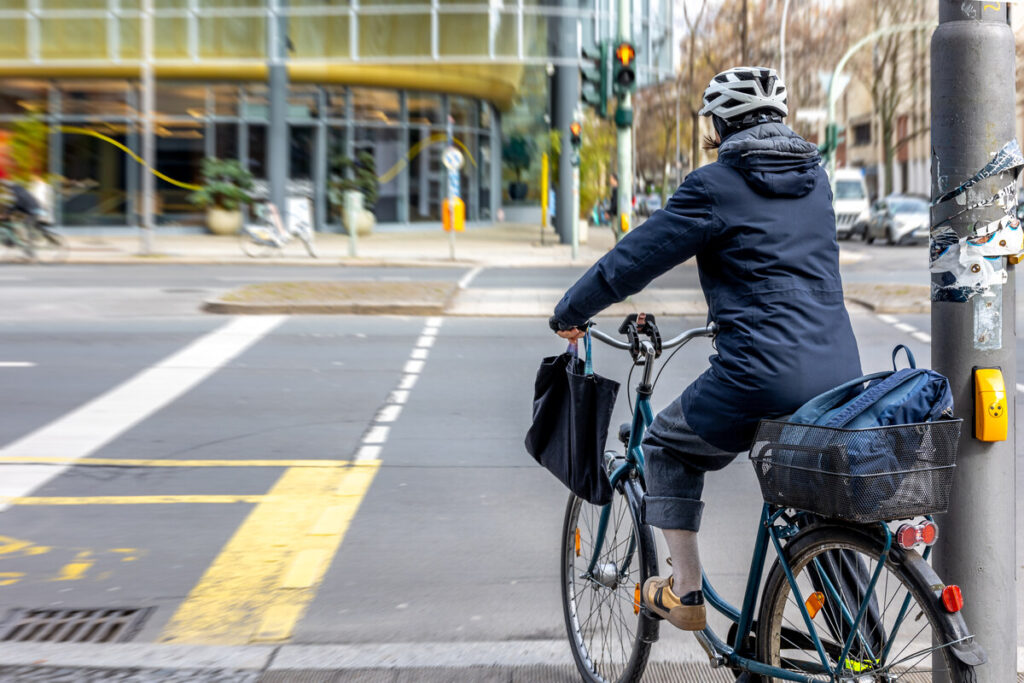
Buying an electric car feels like the obvious way to cut your commute’s carbon footprint, but the data on transport emissions tells a more layered story. Transport is responsible for roughly a fifth of global CO2 emissions, and according to 2011 data, close to a third of all greenhouse gases produced worldwide. Almost all of that, 95%, still runs on oil. The good news is that the biggest gains don’t always come from the car itself.
Not all low-carbon transport looks the same
Sustainable transport, as defined by the EU Council of Ministers, is a system that meets people’s basic access needs while offering a real choice of modes, keeping emissions within what the planet can absorb, and limiting land use and noise. That framing matters because it treats the car, electric or not, as just one option among several, rather than the default to be decarbonized.
Looked at across a full life cycle, from manufacturing to end of life, transport modes stack up in a fairly consistent order: walking and cycling produce the least emissions, followed by electric trains, trams and buses, then battery electric vehicles, hybrids, plug-in hybrids, compressed natural gas vehicles, conventional combustion engines, and finally hydrogen fuel cell vehicles at the top.
What an electric car actually saves you
None of this means electric cars don’t help. In the UK, a Nissan Leaf driven in 2019 produced just a third of the greenhouse gases of an average petrol car over the same distance, even running on a national grid that wasn’t fully decarbonized. That’s a real reduction, not a marketing claim.
But it’s still a car. It still needs parking, still adds to congestion, and still sits well above walking, cycling or electrified public transport on the emissions ranking. Swapping a combustion engine for a battery lowers the ceiling, it doesn’t change the floor.
What cities built around fewer cars actually look like
The clearest evidence comes from modal share, or how people actually get around. In Copenhagen, 62% of commutes happen by bike. In Amsterdam, cycling, walking and public transit together account for 77% of trips, against 23% by car. Paris leans the other way, with 53% of trips on foot, but still only 10% by car. Infrastructure, not individual willpower, seems to be the deciding factor: a 2006 study found that a 5% increase in a neighborhood’s walkability was associated with 6.5% fewer miles driven, along with meaningfully lower nitrogen oxide and volatile organic compound emissions.
Public transit capacity can do a lot of the same work at scale. Bogota’s TransMilenio bus rapid transit system, running since 2000, moves between 43,000 and 48,000 passengers per hour in a single direction, close to what a subway line can carry, at a fraction of the infrastructure cost. Car sharing adds another lever: a single shared vehicle can replace up to 15 individually owned cars, and New Yorkers collectively save an estimated $19 billion a year by owning fewer cars and driving less than the US average.
The catch with treating electrification as the finish line
The most common misconception isn’t that electric cars are bad, it’s assuming they’re sufficient on their own. Reducing overall car use, through walking, cycling and public transit, cuts more emissions per trip than switching fuel types ever will. There’s also a real gap between marketing and substance: Norway’s Consumer Ombudsman has taken automakers to task for misleading green or clean claims, and Australia’s competition authority forced a Saab dealer to stop deceptive environmental marketing after a 2008 federal court ruling. Not every eco label on a vehicle ad holds up to scrutiny.
Why it matters beyond emissions
The upside isn’t only climate related. The UN Environment Programme estimates that 2.4 million premature deaths from outdoor air pollution could be avoided each year with cleaner transport choices. And the average urban resident in the US currently uses about 24 times more energy on personal travel each year than an urban resident in China, and roughly four times more than in Europe, a gap that has far more to do with how cities are built than with what’s parked in the driveway.