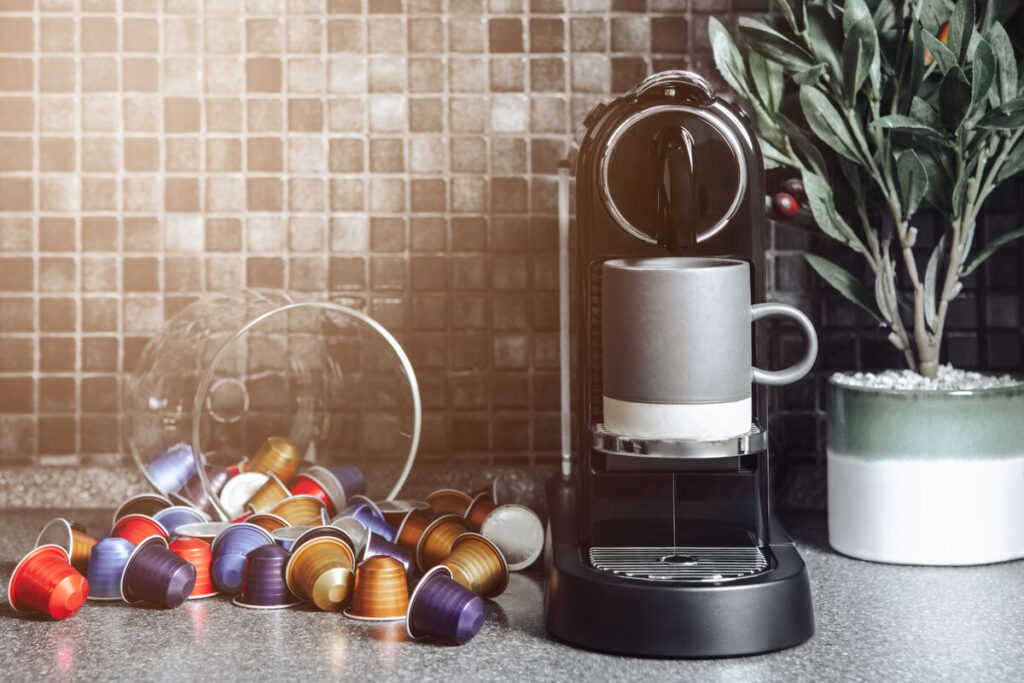
Coffee pods are small, tidy and convenient, which is exactly why they pile up. Whether one can be recycled depends on what it is made of, how it is sorted and where you live, so “recyclable” rarely means the same thing twice.
Pods, pads and capsules are not the same thing
Single-serve coffee comes in several formats. A pod is ground coffee sealed inside its own paper filter. A capsule packs the coffee in plastic or aluminium and is usually designed for one brand’s machine. There are also coffee bags, filter rings and the drip bags common in East Asia. The appeal is real: no measuring, and each portion stays sealed, so the rest of the supply keeps its freshness.
Why the materials matter
Paper pods, such as those used in Senseo machines, can decompose naturally. Plastic and metal capsules, such as those used in Keurig or Nespresso machines, are a different story: they are either not recyclable or need extra processing to separate the container from the used grounds. That mix of plastic, aluminium and organic material is what environmental critics point to. In early 2016, the German city of Hamburg banned coffee capsules from state-run buildings on those grounds.
The plastic K-Cup problem
The cup of a Keurig K-Cup is made of #7 plastic. The company says it is BPA-free and safe, but it cannot be recycled in most places. Even where #7 plastic is accepted, the pods are so small that they can fall through sorting grates. The company has said that newer formats are recyclable if taken apart into paper, plastic and metal, but as one journalist at The Atlantic noted, expecting careful disassembly from people who chose a push-button routine is something of a paradox.
The aluminium case: Nespresso
Aluminium is a better candidate for recycling. Each Nespresso capsule contains about 1 g of aluminium, and recycling that metal can take as little as 5% of the energy needed to make it from ore. The catch is collection. Nespresso offers free recycling bags (one holds up to 100 Vertuo capsules or 200 Original ones, with no rinsing needed) and had collection systems in 36 countries as of 2017. Yet only 24.6% of its capsules are recycled globally, even though the company says it has the capacity to recycle all of them. The gap is between what is possible and what actually gets returned.
What is changing
Alternatives are growing. Some capsules are plant-based and compostable as bio-waste, reusable refillable pods let you use any coffee, and in 2023 Nespresso introduced paper-based pods in France and Switzerland that can go with biodegradable waste. Mail-back schemes, such as the TerraCycle programme for K-Cups, exist too, though they depend on people taking part.
A fair way to look at it
There is no solid figure here to declare capsules better or worse than other brewing methods overall, because the sources used for this article focus on waste, not on the full footprint of the coffee itself. What they do show is that the label on the box matters less than the pod in your hand: paper, aluminium and mixed plastic follow very different paths after the last cup. Checking which kind your machine uses, and what your local system or the maker’s return scheme accepts, is the most useful step.