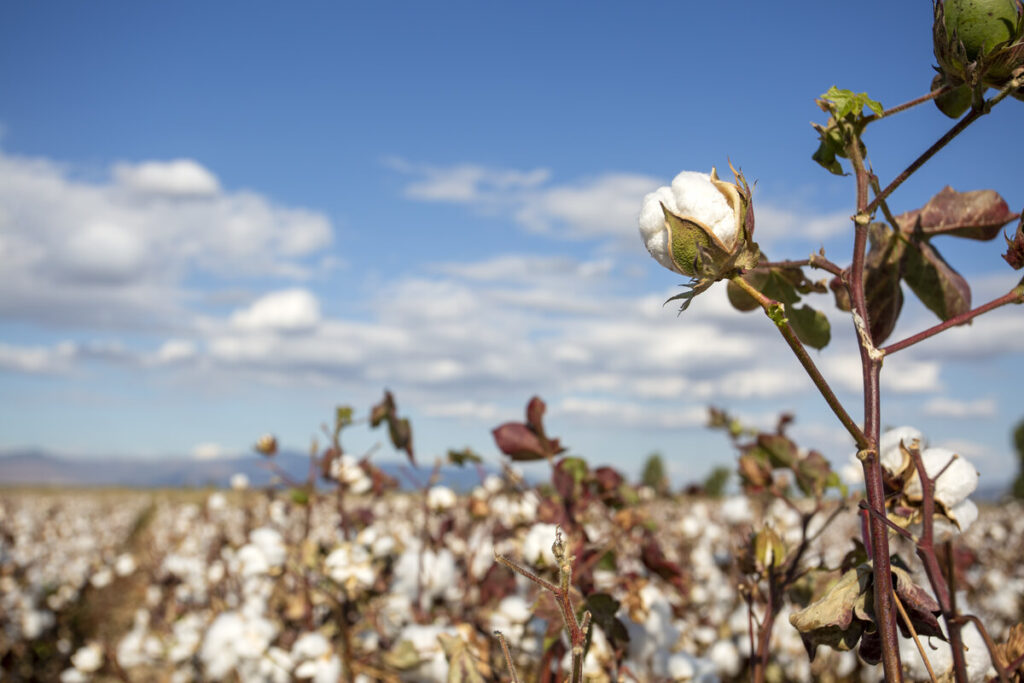
An organic cotton label suggests a gentler, cleaner T-shirt, and in many ways that is fair. But the difference between organic and conventional cotton is more nuanced than the tag implies, and the details are what make it interesting.
What makes cotton organic
Organic cotton is grown from non-genetically modified plants, without synthetic agricultural chemicals such as fertilizers and pesticides. Production is also expected to promote biodiversity and natural biological cycles rather than simply swap one input for another. In the United States, farms must meet the requirements of the USDA’s National Organic Program to sell their cotton as organic.
Further down the supply chain, clothing labels often refer to the Global Organic Textile Standard (GOTS), which the US Organic Trade Association describes as “the world’s leading certification of organic fibers.”
Why cotton is a crop worth looking at
Cotton accounts for more than half of all clothing produced worldwide, so how it is grown matters. It is also an unusually chemical-intensive crop: cotton occupies about 2.5% of the world’s cultivated land but uses 10 to 16% of its pesticides, more than any other single major crop. Conventional cotton growing is linked to roughly 25% of global insecticide use.
That imbalance explains why cotton became one of the first targets of sustainable fashion, and why the organic alternative gets so much attention.
Where the organic advantage comes from
The headline figures are striking: organic cotton uses around 88% less water and 62% less energy than conventional cotton. A large part of the water story comes from how it is farmed. About 80% of the world’s organic cotton is rain-fed, meaning it relies on rainfall instead of irrigation.
Egypt offers a real-world example of what changing farming methods can do. The SEKEM organization began growing organic cotton there in 1990, then convinced the Egyptian government to convert 400,000 hectares of cotton to integrated methods. The result was a 90% reduction in synthetic pesticide use and a 30% increase in yields. Integrated methods are not the same as fully organic farming, but the case shows that cutting chemical inputs does not automatically mean lower harvests.
The nuances behind the label
Organic does not mean pesticide-free. Certified organic cotton bans synthetic pesticides but allows organically approved products such as pyrethrins, copper sulfate and insecticidal soaps. Because organic fields often yield less, application rates of these products can sometimes exceed those used in conventional fields, and organic pesticides “can be at least as toxic as their conventional counterparts.”
Yields also complicate the water picture. Lower output per hectare can mean higher total water use per unit of cotton produced, so the per-field advantage does not always carry over cleanly to every shirt.
Finally, scale. Organic cotton represents only 1 to 2% of global cotton production, with India alone growing 51% of it in 2018, followed by China (19%), Turkey (7%) and Kyrgyzstan (7%). Even fast growth starts from a small base.
What it means for your wardrobe
Choosing organic cotton is a meaningful step on the farming side, especially for pesticide use. But a garment’s footprint does not stop at the field. For a pair of jeans, washing and drying account for about two-thirds of the energy used over its whole life cycle, and for underwear, washing alone represents around 80% of total energy use.
The end of a garment’s life matters too: only about 1% of recycled clothing becomes new clothing, as explained in our look at what really happens to recycled clothes.
So organic cotton is a genuine improvement in how a fibre is grown, rather than a complete answer on its own. Read as one piece of a longer story, from the field to the washing machine, the label becomes a lot more useful.