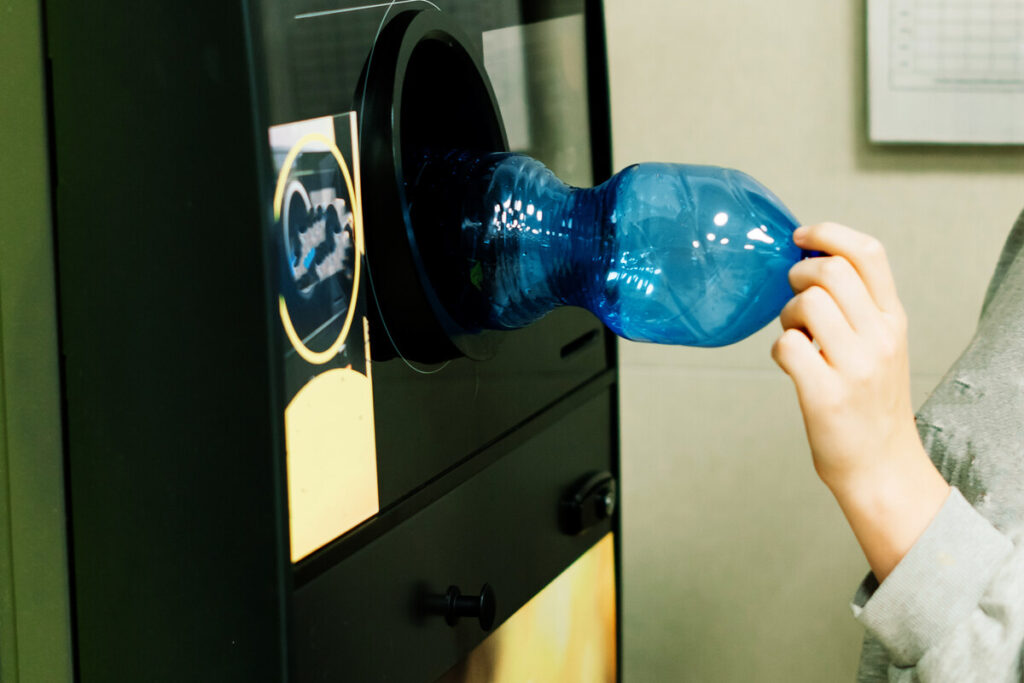
Most people think of bottle deposits as a small refund for good behavior, a few cents back at the supermarket. But in the countries that use them, those few cents do something remarkable: they bring back almost every bottle and can sold. Here is how such a simple idea works, where it comes from, and why the results vary so much from place to place.
What a deposit return scheme actually is
A deposit return scheme, known in law as container-deposit legislation, adds a small monetary deposit to the price of a drink sold in a bottle or can. When the empty container is brought back to a redemption center or, in many places, to a shop, the deposit is refunded. The goals are practical: support recycling alongside curbside collection, save energy and raw materials, cut litter and extend the life of landfills.
The idea is far older than modern recycling programs. As early as 1799, the Dublin firm A & R Thwaites & Co paid two shillings a dozen for returned bottles, and Schweppes followed a similar policy around 1800, without any law requiring it. Denmark created its first national system for glass bottles in 1922, British Columbia launched the oldest scheme in North America in 1970, and Oregon passed the first US bottle bill in 1971.
Why a few cents changes behavior
The mechanism is simple: once a container carries a value, throwing it away means throwing away money. That turns an empty can from waste into something worth keeping, returning or even picking up from the street, which is why deposits have also become a small source of income for some individuals and non-profits.
Convenience matters too. In Denmark, about 95% of containers are collected through reverse vending machines, the automated machines that scan a bottle and print a refund voucher. Norway had more than 15,000 return points in 2016, about 95% of them automated.
What the numbers look like
Studies put typical return rates at up to 90% or more, and the best-known European systems go further. Germany, with a standard deposit of €0.25 on single-use containers, sees 97% to 99% of single-use bottles and about 99% of cans returned. Norway reported 95.4% for PET bottles and 96.6% for cans in 2014, Finland recorded 96% for aluminium cans in 2016, and Denmark reached 92% in 2019.
Some countries add a tax lever on top of the deposit. In Norway, the excise tax on drinks falls as return rates rise: a 90% return rate earns a 90% discount. In Finland, containers outside the deposit system face a tax of €0.51 per liter, high enough that nearly all producers choose to join.
For comparison, collecting materials is usually the expensive part of recycling: roughly two-thirds of the total cost sits in picking materials up, as explained in our guide to recycling vs downcycling. A deposit essentially gets consumers to do much of that collection themselves.
Why results vary so much
Not every scheme performs like Germany’s. Hawaii recorded a 68% return rate in 2015, New South Wales 69%, and Australia’s Northern Territory 54% in 2015-16. Design details play a role: in New Brunswick, Nova Scotia and Prince Edward Island, a “half-back” model refunds only half of the deposit, with the rest covering administration costs.
The nuances worth knowing
A high return rate is not the whole story. In Germany, the share of reusable containers sold fell from about 80% to below 50% after the system began, a reminder that recycling a single-use bottle is not the same as refilling one. Germany’s roughly 2 billion reusable beer bottles, each reused 36 times on average, show what the refillable route can achieve.
Unclaimed deposits raise another question. They are often kept by distributors or bottlers to fund the system, or passed to governments for environmental programs. One estimate suggests German manufacturers have earned €3 billion from containers that were never returned, and in Iowa, keeping unredeemed deposits has been found to be highly profitable for distributors.
Finally, schemes take time to arrive. The Netherlands extended deposits to cans only in April 2023, after a delay that followed supermarket lobbying, and Australia’s national scheme has been repeatedly postponed amid industry opposition and disagreements between states.
A small price with a big effect
Bottle deposits are not a cure-all: they cover drinks containers only, and they work best when paired with reuse rather than replacing it. But they show how a modest, well-designed incentive can make returning a can feel completely normal. For anyone wondering whether everyday habits can change at scale, a few cents on a bottle is one of the clearest examples available.