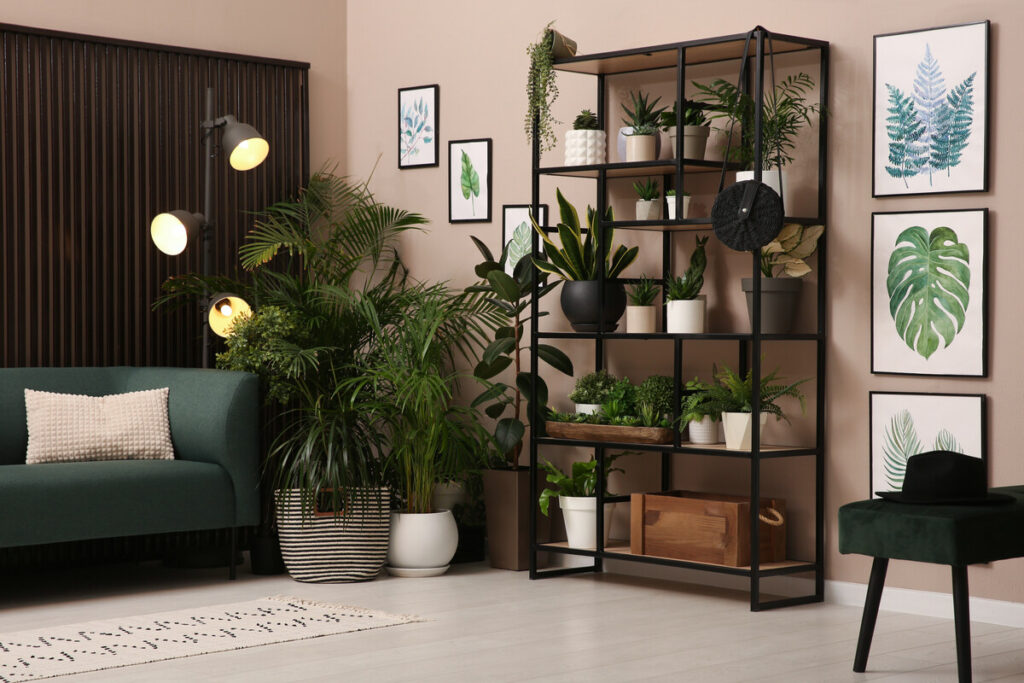
Snake plants, peace lilies and English ivy often come with a promise: put a few around the house and they will scrub the air clean. The idea traces back to a real NASA experiment, but what that study actually tested is quite different from a living room.
Where the air-purifying plant idea comes from
In 1989, NASA teamed up with the Associated Landscape Contractors of America to look for ways to clean the air inside sealed environments such as space stations. The lead researcher, B. C. Wolverton, placed common indoor plants in closed chambers and measured what happened to three volatile organic compounds (VOCs): benzene, formaldehyde and trichloroethylene.
The results were striking. Besides absorbing carbon dioxide and releasing oxygen through photosynthesis, the plants appeared to pull these pollutants out of the air. The list of species tested reads like a garden centre bestseller shelf: snake plant, English ivy, peace lily, weeping fig, bamboo palm, several dracaenas, gerbera and chrysanthemum. That list is still recycled in countless “best plants to purify your home” articles today.
What was really doing the cleaning
The study itself pointed to something less obvious than the leaves. It was mainly the combination of roots and the microorganisms living in the potting soil that broke down the pollutants. A later study in 2004 confirmed that soil microbes in a potted plant remove benzene, with some plant species contributing as well.
Follow-up research added an important twist. Soil and roots worked well at high VOC concentrations, but at low concentrations they only became effective after a higher exposure had “kick-started” the process. Researchers also found they could get the same effect by enriching the soil directly with VOC-degrading bacteria. That may explain why different experiments produced such different results.
Why a sealed chamber isn’t your living room
The original tests used sealed chambers and very high pollutant levels, two conditions that rarely exist in a home or office. In a normal building, air constantly leaks and flows between inside and outside, and that exchange already carries VOCs away.
A 2019 review put a number on the gap. To match the VOC removal that ordinary outdoor-to-indoor air exchange already provides, you would need between 10 and 1,000 houseplants per square metre of floor space. Even at the low end, that is a jungle, not a decorated shelf. Plants do absorb carbon dioxide and release oxygen and water indoors, but the measurable impact of a few pots is small.
The NASA results also did not replicate well in later studies. A 2014 review summed up the situation fairly: the ability of plants to take up VOCs is well documented in the lab, but their effect in complex real spaces like offices still needs more investigation.
The humidity catch
Plants release water through their leaves, and they appear to reduce some airborne microbes and molds. In a very dry room, a bit of extra moisture can feel pleasant. But more humidity is not always better. Indoor air quality guidelines suggest keeping relative humidity roughly between 40 and 60% for comfort, and below 60% to limit mold growth. With heavy watering in a small, poorly ventilated room, the extra moisture can work against air quality rather than for it.
What actually improves indoor air
Indoor VOC levels are often higher than outdoors, sometimes up to ten times higher, because they come from everyday sources: new furniture and carpets releasing gases, cooking, cleaning products and paint. The approaches that make a real difference are well established:
- Source control: limiting the products and activities that release VOCs in the first place
- Ventilation: opening windows or using trickle vents to dilute pollutants with outdoor air
- Filtration: a HEPA air cleaner when ventilation is poor or outdoor air carries fine particles
Indoor CO2 levels are also a handy gauge of ventilation: the US National Institute for Occupational Safety and Health treats concentrations above 1,000 ppm as a sign of inadequate ventilation.
So are houseplants worth it?
For mood and comfort, the evidence is encouraging but mixed. A 2022 systematic review of 42 studies found that most reported positive effects, yet only diastolic blood pressure and academic performance showed a statistically significant improvement once the best data were pooled. An earlier critical review struck a careful tone: “It appears that benefits are contingent on features of the context in which the indoor plants are encountered and on characteristics of the people encountering them.”
That is a fair way to see it. A peace lily will not replace an open window, but it can still make a room feel calmer and more alive. Enjoying plants for what they are, and leaving the air cleaning to ventilation, is the combination the science supports.