“Thrifting” became a common word in the United States in the early 2010s, and second-hand shopping has kept growing since, both on the high street and online. It is often described as the easy green choice. That reputation is mostly earned, but what you buy and how often you buy it matter as much as where it comes from.
What thrifting actually means
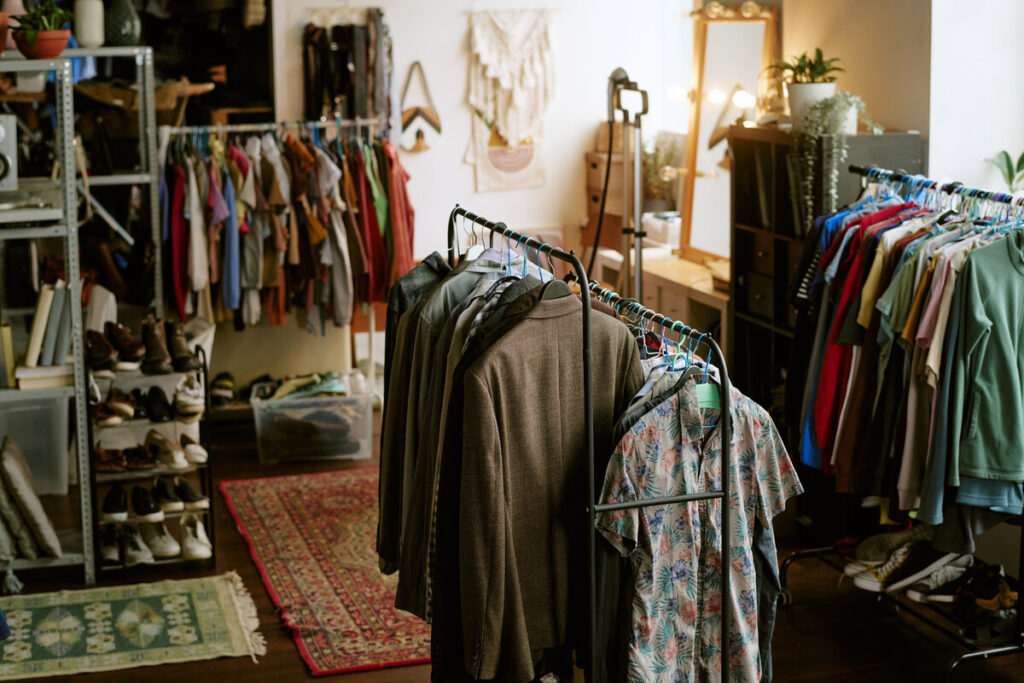
Thrifting simply means buying used goods, items that someone else has already owned and that are sold “not as new.” The classic venue is the charity shop, a store run by a charitable organization to raise money. It sells items donated by the public, is often staffed by volunteers, and passes its income on to the charity’s cause once costs are paid.
The names change from country to country: thrift stores in the United States and Canada, op shops (short for opportunity shops) in Australia and New Zealand, charity shops or hospice shops elsewhere. Not every thrift store is a charity, though. Some, like Savers, are for-profit companies, and consignment shops sell items on behalf of their owners, who are only paid if the item sells.
Where the environmental benefit comes from
The logic is straightforward. A second-hand item has already been made, so buying it uses fewer natural resources than buying something new, and it stays out of the waste stream a little longer.
Research backs this up: buying used goods significantly reduces the carbon footprint compared with the full life cycle of a new product. One caveat is that the exact footprint of production, raw materials and supply chains is unknown for most products, so the precise saving is hard to put a number on.
The same reasoning applies well beyond clothes. The Sierra Club, an environmental organization, argues that buying second-hand furniture is the “greenest” way of furnishing a home.
A concrete example: the UK’s charity shops
The UK shows what this looks like at scale. According to the Charity Retail group, there are more than 10,000 charity shops in the country in 2025, over 3% of all retail units. They generated £387 million in profit in 2022.
The textile figures are just as striking. Each charity shop saves an average of 40 tonnes of textiles a year, either by selling items in store or by passing unsellable ones (stained, damaged or out of fashion) to textile merchants for reuse or recycling. Across the country, that adds up to around 363,000 tonnes. Valued at the 2010 landfill tax rate of £48 a tonne, it represents more than £17 million a year in avoided landfill tax.
The idea is not new either. One of the earliest known UK charity shops opened in Wolverhampton in 1899, and the first Oxfam shop started trading in Oxford in December 1947.
Where it gets more complicated
Cheap can mean more
Second-hand is only greener if it replaces a new purchase. Sustainable fashion specialist Meital Peleg Mizrachi and environmental specialist Ori Sharon have noted growing signs that second-hand shoppers reproduce fast fashion habits, such as buying more often and using thrift purchases to ease shopping guilt.
Donating is not the same as reselling
Shops can only sell part of what they receive. In the United States, almost 5 billion pounds of clothing are donated to charity shops every year, and only about 10% can be resold in store. The rest takes other routes, which we look at in our article on what happens to donated clothes.
Online resale changes what ends up on the rails
Online second-hand shopping grew by 23% between 2023 and 2024, on platforms such as eBay, Depop and Vinted. One side effect is that higher-value items are increasingly sold online, while lower-value ones go to physical thrift stores, which can then be left with poor-quality or broken goods they have to throw away.
A few items are better bought new
Some products carry real risks second-hand. Upholstered furniture and bedding can harbour bedbugs, and in Canada, recalled products, baby walkers and expired children’s car seats, as well as hockey and bike helmets, cannot be resold. For everyday clothing, South Australia’s public health authorities consider the health risk low, and washing items in hot water is one simple way to remove it.
A small habit within a bigger shift
Thrifting fits naturally into the wider idea of a circular economy, where products stay in use for as long as possible. Its strongest effect comes when a used item takes the place of a new one, and when good-quality pieces keep circulating rather than being bought and dropped off again a few weeks later. Seen that way, the most sustainable thrift find is simply the one that gets worn, read or sat on for years.