The label “vegan leather” only tells you that no animal was involved. It says very little about what the material is actually made of, and that is where most of the confusion starts.
What vegan leather usually is
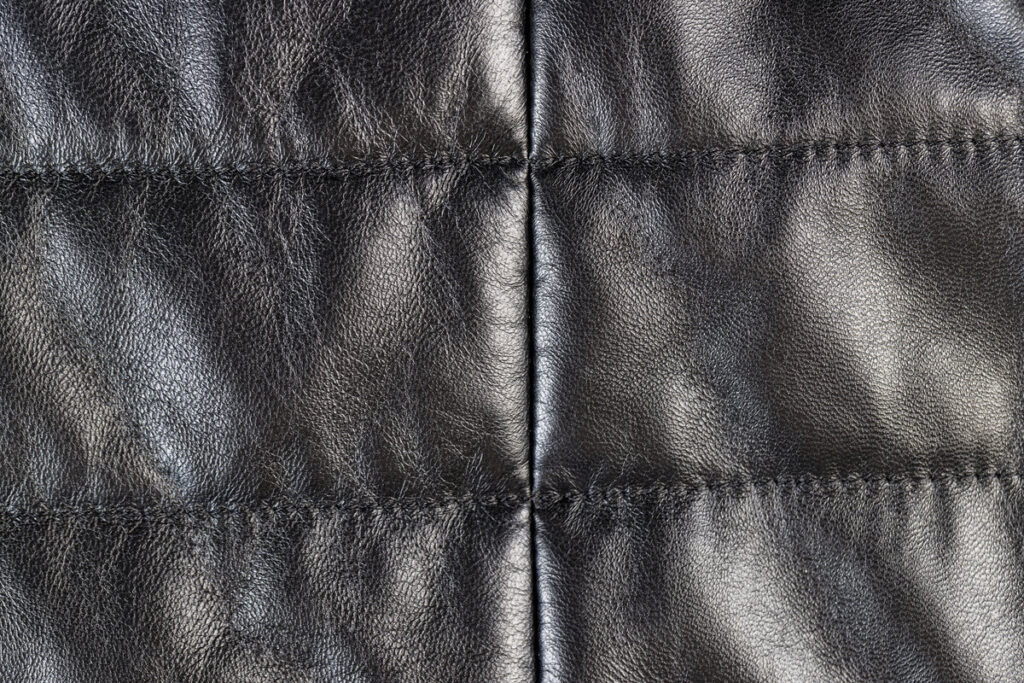
“Vegan leather” is one of many names for artificial leather, along with faux leather, leatherette, imitation leather, PU leather and pleather. It is used for jackets, shoes, sofas and car interiors, often because it costs less than the real thing or because buyers want to avoid animal products.
The most common recipe is a fabric base coated with layers of plastic, usually polyurethane or PVC. A textured paper is used as a mould, the plastic layers are cured on it, and the paper is peeled off to leave a leather-like grain. Polyurethane has been more popular than PVC since around 2016.
Where the plastic question comes in
PVC needs added chemicals called phthalates to stay soft and flexible, and its production relies on petroleum and a lot of energy. At the end of its life it does not break down the way real leather does, and in a landfill it can release dioxins into soil and water.
So a jacket sold as vegan can be a plastic product through and through. That does not make it a bad choice for everyone, but it does mean the word “vegan” is not a synonym for “plant-based” or “low impact”.
Real leather has its own footprint
Leather is not a neutral baseline either. Estimates for the carbon footprint of bovine leather range from 65 to 150 kg of CO2 equivalent per square metre, largely because of cattle rearing. Tanning adds chemicals such as chromium and sulfides, and one tonne of hide can produce 20 to 80 cubic metres of wastewater.
How bad this gets depends heavily on how a tannery is run. Where rules are lax, as in the Kanpur and Dhaka tannery districts described in the research, effluent has polluted rivers and harmed workers’ health. Where a tannery is well managed, chromium loads can be cut dramatically, and one UN industrial agency review cites a potential 94% reduction in chrome pollution with advanced technology.
So which one is greener?
There is no universal winner. A 2018 environmental profit and loss report by the luxury group Kering found that producing vegan leather can have an impact up to a third lower than producing real leather. That is a meaningful difference, but note the wording: “up to”, and for production only.
Durability and disposal complicate the picture. Real leather can last for decades and takes an estimated 25 to 40 years to decompose, while plastic-based alternatives can persist for centuries. On the other hand, artificial leather needs little maintenance and does not crack or fade easily, though the surface of some types can rub off over time.
The newer plant-based options
Not every alternative is plastic-coated. Piñatex is made from pineapple leaves, and cork leather comes from compressed cork oak bark. Researchers are also developing materials from fungi, yeasts and bacteria, and a fermentation method for producing collagen, the main protein in real leather, is under development. Because some of these products still combine plant fibres with synthetic coatings, it is worth checking what is actually in them rather than trusting the name.
What to look for on the label
The most useful question is not “is it vegan?” but “what is it made of, and how long will I use it?” A product that stays in your wardrobe for ten years usually beats a cheaper one replaced every two, whatever the material. Some artificial leathers have also been found to carry traces of restricted substances, which is another reason to look for clear composition details rather than a single marketing term.