Bamboo sheets, socks and T-shirts are sold as one of the softest ways to dress greener. The plant itself has a genuinely impressive record, but the fabric on the shelf is usually something else: viscose rayon. Here is what the label actually tells you.
Two very different things share the same name
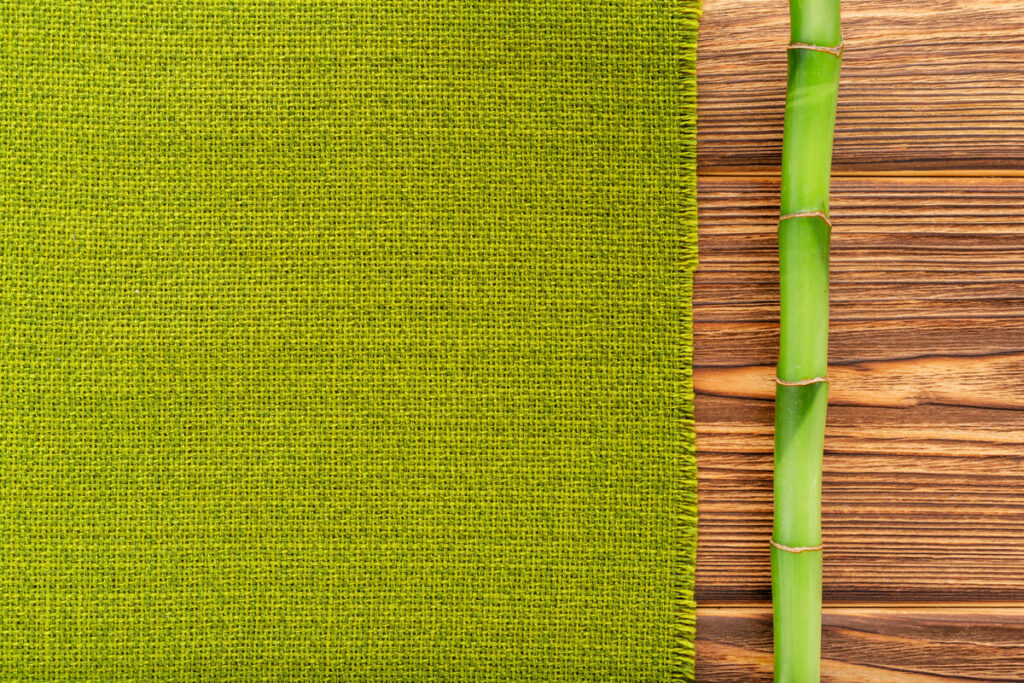
“Bamboo textile” simply means any cloth, yarn or clothing made from bamboo fibres. In practice, that covers two very different products.
The first is mechanically processed bamboo, sometimes called bamboo linen. The woody stalks are crushed, then natural enzymes from microorganisms already living on the plant break down the walls so the fibre can be washed out. It is the same basic method used to turn flax or hemp into linen and gives a durable fabric that keeps more of bamboo’s natural strength.
The second, and by far the most common, is bamboo viscose. Here bamboo chips are just a raw material, pulped and chemically dissolved, then spun back into a fibre. The US Environmental Protection Agency notes that this process alters the fibre’s physical form and molecular structure, so the end product is functionally identical to rayon made from any other plant cellulose, such as wood pulp.
How bamboo becomes viscose
The viscose method treats cellulose pulp with caustic soda, then with carbon disulfide, a highly toxic chemical. The result is dissolved and pushed through a spinneret into a bath of sulfuric acid, where it solidifies into filaments of nearly pure cellulose.
The chemical does not end up in your pyjamas: carbon disulfide is volatile and is lost long before the fabric reaches a shop. The concern lies upstream. As of 2004, about 250 grams of carbon disulfide were emitted for every kilogram of rayon produced, and rayon making accounted for most global emissions of the chemical as of 2008. It is well documented to have seriously harmed rayon workers’ health, and studies from the 1930s found significant effects in 30% of American rayon workers. Recovery systems can cut emissions by about 90%, but they have not always been used where the law did not require them. Production has since largely moved to China, Indonesia and India, where, as of 2016, factories generally published no environmental or worker safety data.
What the plant genuinely does well
None of this erases bamboo’s strengths as a crop. It is the fastest growing woody plant in the world, and because it is a grass, it regrows after cutting without replanting, much like a lawn.
- Yield: reported averages reach up to 60 tonnes per hectare, compared with about 20 for most trees and 2 for cotton.
- Carbon: a bamboo plantation can sequester 62 tonnes of CO2 per hectare per year, against 15 for a young forest, although that carbon only stays locked away if the product is not burned.
- Soil: its roots stay in the ground at harvest, which is associated with less erosion than crops that are replanted every year.
- Inputs: bamboo does not need pesticides or fertilizers, even if some growers use them to boost edible shoots.
Where the green reputation gets more complicated
The label often says less than it should
Many countries forbid selling viscose as plain “bamboo”. The US Federal Trade Commission requires wording such as “rayon made from bamboo” unless the yarn is made directly from bamboo fibre, and it has brought cases against major retailers including Amazon, Walmart and Macy’s. The European Union requires “bamboo viscose” or “viscose from bamboo”. Yet a 2021 study found that almost half of online retailers still marketed bamboo viscose simply as “bamboo” (a familiar case of greenwashing).
A fast-growing plant is not automatically a gentle one
Plantations can ease pressure on native forests, but some forest has also been cleared to make room for them. A mature forest also stores more biomass over the long term and supports a far more diverse range of wildlife. And while bamboo uses considerable water, its efficiency relative to growth may still beat many trees.
The fabrics worth knowing about
If you like the feel of bamboo, the useful question is how it was processed, not where the cellulose came from. Bamboo linen avoids the chemical route entirely. The lyocell process, sold under names like Tencel, dissolves cellulose with a different solvent and avoids carbon disulfide, though as of 2018 its higher cost still kept it from wide use.
On the end-of-life side, cellulose fibres are an advantage: like cotton, bamboo fabric biodegrades in soil, and research has found lyocell breaks down readily while polyester does not biodegrade at all. As with organic cotton, the plant is only one part of the story. Reading the full fibre name on the label is a simple way to see the rest of it.